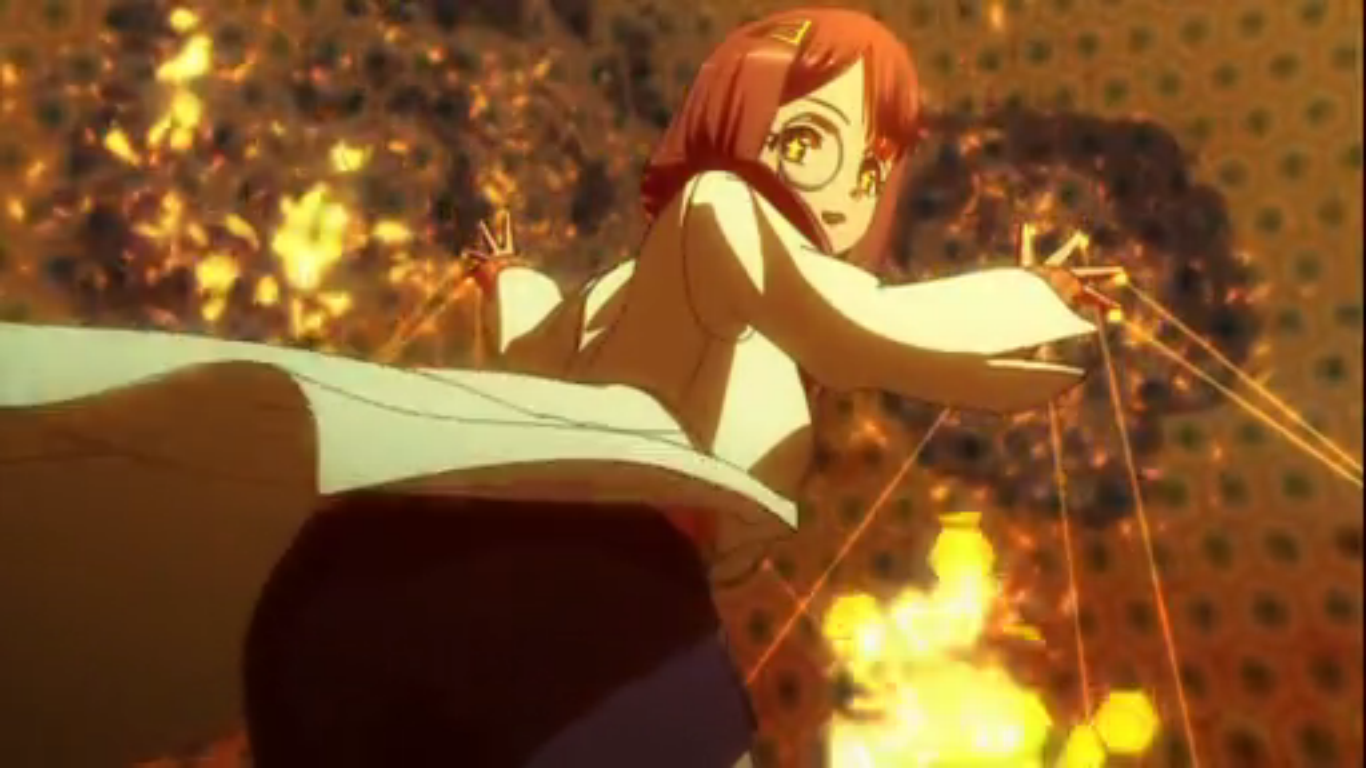
I have to admit, I was expecting a lot more of this episode to focus on the rest of the cast’s effort to rescue the now-submerged Iona and Gunzou. I wasn’t expecting, or even really hoping for, a focus on those two. But that’s the direction the show decided to go in, and it produced an outstanding piece of work as a result. There were a few moments where they went a little overboard with the drama (Takao’s sacrifice laid it on pretty thick), but the majority of this episode was quietly stuffed with character detail for Iona and Gunzou.
Author Archives: torisunanohokori
Fun With Numbers: Anime as Manga Advertisments in 2012 (and their respective myanimelist ranks)
Update 2 (July 15, 2014): New, more accurate data is here.
Update (Jul 1, 2014): This post doesn’t measure releases in 2-week totals, which turns out to be a huge deal in many, many cases. I’m currently working on an updated version of both this and the 2011 data. Just be aware of that before citing the data from here regarding any one show.
By all rights, a 30-series sample like the one I had for 2011 was enough to get most of the relevant information regarding how anime boosted manga sales. However, during that analysis, I bumped into an incidental correlation, myanimelist ranking versus gain in manga sales, that was far too juicy to ignore. If that correlation is real, it points to a very tangible link between the Japanese mainstream community (who have enough disposable income for manga but not for anime) and the English-speaking online community (who generally pay a comparable pittance, if anything, for the anime they watch). But I couldn’t be sure from just the 2011 data, since that was the sample that gave rise to the theory. So I did what any good researcher would do, and pulled another year worth of data to see how things would match up. The results can be found on this spreadsheet, and are sorted in order of descending myanimelist rank below.
First Reactions: Samurai Flamenco Episode 9
King Torture’s organization is a really big enigma at this point. It’s got the Sunred comically incompetent villains, but it’s also got a definite second gear that puts it on a creepily effective streak, and that was full-up on display this episode.
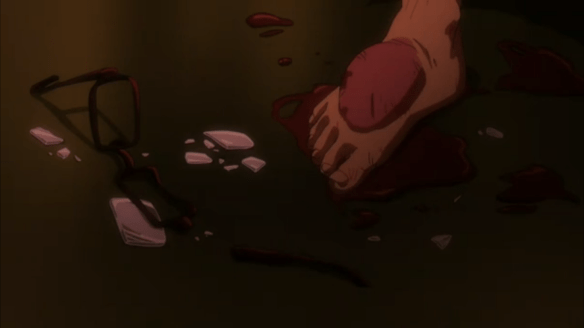
According to the man at the top, that was all part of a deliberate ploy. I’d like it less if this were all part of some elaborate plan and not changing gears to fit the situation at hand, but if it is a 100% intentional strategy, then it’s a surprisingly astute one. There’s been plenty of good exploration in other works of what happens when the heroes (or really anyone) win repeatedly and overwhelmingly over a long period of time.*
Whether the initial winning streak was a deliberate one, it was really interesting to see the protagonists react. Mari got a weird combination of angry and bored, tempting fate with an in-your-face challenge to K.T., an acto fo poking the iron maiden that probably made her kidnap target alpha. Masayoshi lost a lot of his initial “I don’t care if it’s just one kid” determination and let his small-time celebrity go to his head. I like him quite a bit less now because of what I saw this week, but I kinda think I’m supposed to. Time will tell whether that move was a good idea or not; it’s harder to stay engaged with a story this sidewindery without a likeable cast of characters. Gotou does kind of take care of that, since he’s still the level-headed smart guy he’s always been. By all accounts, he and the professor were the only ones who saw that the big twist might happen, and I totally emphasize with him flaming Masayoshi’s video streams at this point.
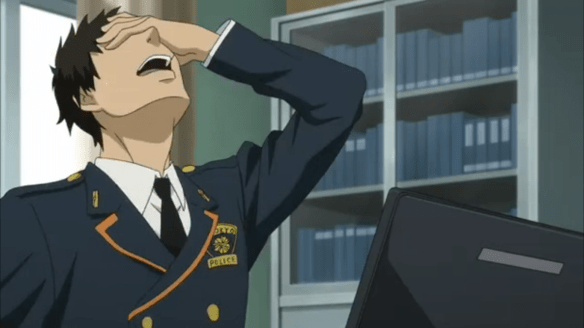
At this point, just the fact that the heroes are in the state they’re in proves K.T. had a point in his monologues. We always knew Mari wasn’t in it purely for the people, but the extent to which Masayoshi soured up, even over an extended period of time, shows that it’s difficult to have motivated heroes without credible villains. And since their battles are looking increasingly like ones that’ll start posting body counts again, the show may start to really deconstruct the hero fantasy in an entirely different way from how I initially expected.
*Including a certain Brandon Sanderson novel that should have been on shelves a month ago. One of the big things I like about A-list manga and anime (as opposed to A-list novels and games) is that they do a great job of keeping their releases to a regular schedule. Granted, from a creative perspective, you do trade away some valuable fine-tuning that way and raise the risk of burnout. But I find that a lot of that is often offset in the quality of the finished product by the increased focus a hard deadline brings. This is one of those issues where each side brings pluses and minuses, and it kinda comes down to what flavor of creation you’d rather have.
First Reactions: Kyoukai no Kanata Episode 10
This is honestly a hard episode to comment on. Five minutes in, I was all ready to put on my hype hat and just shower it with praise for sidestepping the colossal, ill-conceived excess drama that pervaded the second half, opting instead for a three-episode aftermath, like a more extreme version of the twelfth episode of Ookamikakushi cross-bred with the final exam from Hunter x Hunter. Unfortunately, that decision wasn’t the one the writer actually made.
Instead, we got an an episode that was, among other things, a poorly placed and overly long downswing in pacing. I get that they were going for added drama by having Mirai turn out to be an assassin all along, but do they really need to show each meeting she had with the Nase family about that job? Every bit of information I needed on that I got through the initial reveal. With much more pressing questions (Mirai’s apparent death being one of them) on the table, the entire second half of the episode felt like a colossal waste of time.
Fun With Numbers: Thermae Romae, Curious Outlier
One of the interesting tidbits that fell out of my research on manga that got anime in 2011 was the surprising coincidence of high (1500th or better) myanimelist rankings and increased manga sales. At least, it was intriguing enough that I decided to delve into it further, pulling sales figures for the 20 manga which both got anime and charted on the Oricon rankings in 2012. The full analysis is coming, but, short version, there’s a 90-plus percent that that correlation is a very real thing, indicating a strong link between the opinions of myanimelist users and the Japanese manga-buying public, to the extent that I might even be able to plug it in to my sequel probability equation and get the “can’t predict loss-leader effects” monkey partially off the sequel probability equation’s back.
All of which makes Thermae Romae, which presided over a 100k+ increase in week one sales of its manga while posting a piddling rank of 2248th on myanimelist, a case worth a closer look.* Is the jump in average week-one sales from 222,000 volumes for 3 and 4 to 323,000 volumes for 5 and 6 indicative of the effects of the anime, which began and ended between the releases of 4 and 5? Continue reading
First Reactions: Arpeggio of Blue Steel Episode 9
If I had to list of things I really like about the show at this point, after putting down the whole “you can’t stop the future” attitude behind its production, the next thing immediately on the list would be that awesome battle soundtrack. It’s nice to feel like every part of the show is bringing the big-drama gear to the table, and nothing says unshakeable like the way the music maxed out and the camera zoomed around when Hyuga opened off the combative festivities.
First Reactions: Kyoukai no Kanata Episode 9
It’s a testament to the chemistry the show’s been building between the main four that the drama over Akihito’s transformation this time felt as real as it did. I particularly liked the scene where Mirai found his notes on her birthday gift; that was a nice, quiet package of emotion.
Unfortunately, that was one of the few things I liked about this episode, the rest was full of irritating, bush-league cliches.
First Reactions: Samurai Flamenco Episode 8
Eschewing my usual order for this week for the obvious reasons, plus the fact that I’m a day late getting to everything that came out since Monday.
Samurai Flamenco is the Allen Iverson of the Fall season; every subplot you can dredge up is interesting as hell. For starters, King Torture is going to be a thing. Which means that Goto and the Flamencos are an, albeit not entirely textbook, hero team. It’s a dynamic made more juicy by the fact that Mari didn’t really react to King Torture’s proclamation until he acknowledged Samurai Flamenco as the main character of the show. Meanwhile, her finisher remains blunt trauma to the groin even with triceratops-cauldron hybrids.*
On the production side, there’s plenty more to sink your teeth into. Takahiro Omori is still a badass who pulled off a longer version of Escaflowne’s prologue, except in 2013 where that stuff is approximately 20 times as commercially painful. This is far from the biggest right turn a show written by Hideyuki Kurata has ever taken, but the “coolest show by him” crown is very much in a rough and tumble title defense at the moment. The show is still hiding OST at this point; the scene where SF showed up on the bus had another brand-new track. And just how little animation can they get away with? This episode utilized still frames like it was the late-80s.
I’m a huge fan of both Dai-Guard and Astro Fighter Sunred, but I didn’t think you could mix their formulae like that and have it work. It’s working right now, though. The fact that they’ve already gone through at least 8 monster of the week battles after an episode and change does make me wonder whether this arc is going to last for 13 episodes or just 3. The pacing suggests to me that this King Torture business will either be over or escalating wildly when it hits the halfway break in late December.
*Oh, a further fun subplot alert: If it wasn’t enough that Stroheim’s VA showed up last week, now ACDC is getting in on the action. I have to wonder if this show is eventually going to tap the entire vocal cast of Battle Tendency.
First Reactions: Arpeggio of Blue Steel Episode 8
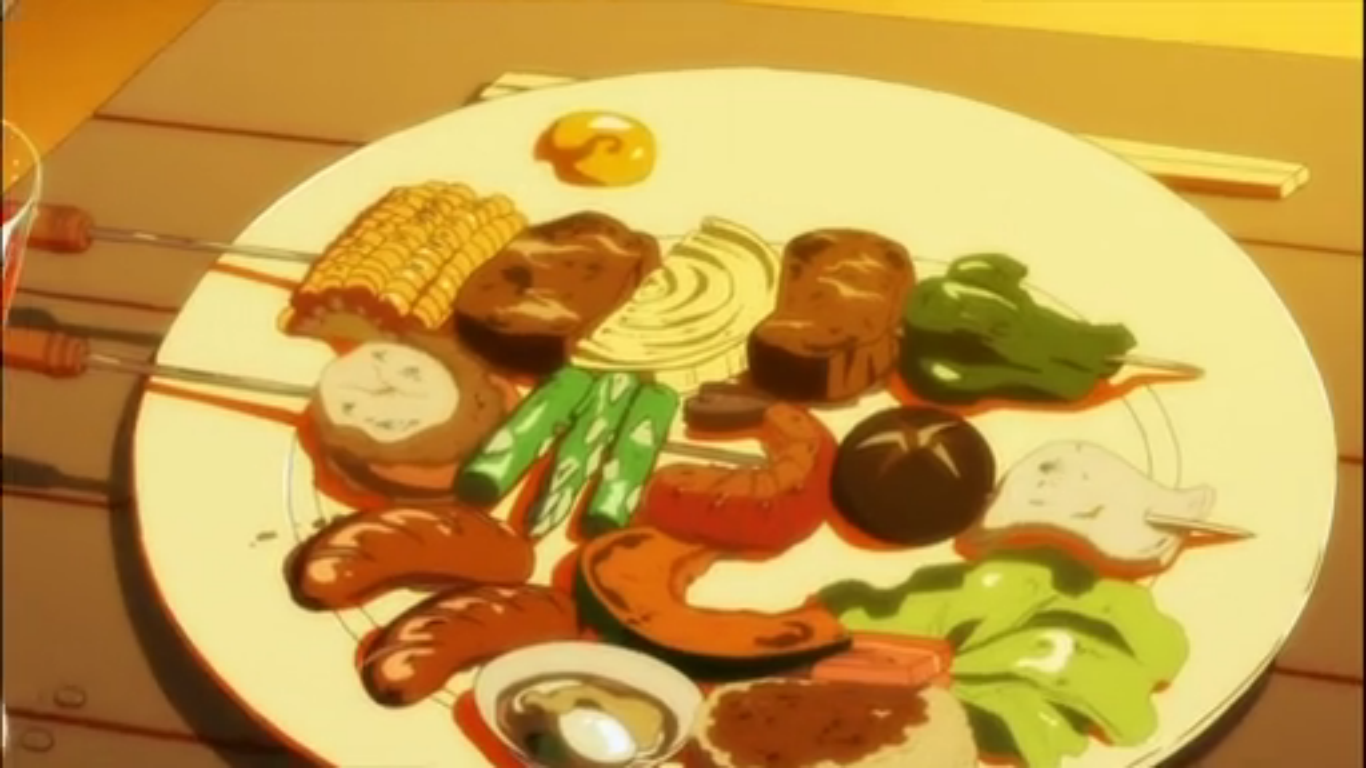
I was expecting a more straightforward head-on confrontation after the arrangement of battleships opposite one another last week, but this show surprised me again. It was a sense of surprise that went from cautiously neutral to pleasant, as the cast just ended up in a scenario that was equal parts smooth-talking negotiations and beach party. There’s certainly an appeal to the way Gunzou picked, the subversive-diplomacy-verging-on-bribary option. It’s just a shame the ship he was trying to lull ate the peppers first, disarming the live charm-offensive grenade Gunzou and the crew tossed out. The slight expression of realization from Iona when she looked at Kongou’s plate was beyond priceless.
Beyond that, I gotta say that I really liked the beach party portion of the episode. One of the pleasures in anime with even decent casts of character is just watching them bounce off one another in goofy freestyle, and the beach party was just jam packed with that. In addition to bulking up the charming aspects of them all, it also doubles as a bonding experience for everyone on team Gunzou, as they hadn’t really had time to hang out as a group and gel before now. It should make the next episode, which will presumably contain a straight-up blow-by-blow with the now guns-blazing Kongou, worth the wait.
Fun With Numbers: How Much Does Promoting Manga Help Anime?
Ever since Inu x Boku SS first drew my attention to the subject in June of this year, I’ve been quite interested in the concept of anime in the context of its broader commercial impact. It’s not exactly counter-intuitive to point out that anime doesn’t get made in a vacuum where disk sales, important as they are, are the only thing that determine the success or failure of a project. There are many factors that play into that equation; licensing cash, character goods sales, TV ratings, etc.
But manga sales are particularly interesting for two reasons. First, we can track them fairly easily; animenewsnetwork keeps English-language versions of the weekly Oricon rankings of manga that date back to 2008, so there’s a lot of baseline data that we can compare with newer series. So when Blue Exorcist did Blue Exorcist things…
…it’s pretty obvious where the cause lies. Second, because the increase in sales per volume can potentially be really high (see above chart), it’s sometimes worth it for manga publishers to take a gamble and partially fund an anime adaptation. While such funding isn’t going to pay for most anime by itself, readers of this blog will be aware of the tangible influence of marginal increases in financial stability.
What follows is an analysis of how manga to get an anime adaptation in 2011 fared overall at the marketplace, with a look at when and why publishers chipping in for an adaptation ala Shonen Sunday in 2013 is a good business move in theory (while still hinging, as everything ultimately does, on competent execution).