There is no one distinct flavor to the enjoyment of manga. It’s one of the main reasons I kept coming back to it despite getting burned out on various genres of series at various times. Sometimes Manga blows you away with script, sometimes with storyboard, sometimes with sweeping artstyle. Each manga has its own individual approach, and, though there may not be a right occasion for every manga, there’s a right manga for every occasion.
In some ways, it might seem harder to talk about more episodic series as candidates for being the best at anything. But that thought process gets lost in the fact that there are stories that work better told as little anecdotes rather than massive epic sagas. Sometimes a nice story about a couple sneaking into a school to watch some fireworks is all a guy needs. I’m picking Mysterious Girlfriend X this week because a chapter came out, because it was cute, and because I liked it.
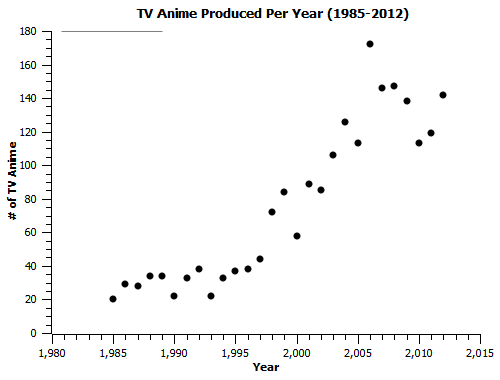
Much has often been made of how the anime industry has evolved over the years. Whenever this is pointed out, it’s usually framed in the form of some criticism; the prevailing artstyle has changed (somewhat true, but largely irrelevant), the amount of ecchi/harem anime has increased (true, though they are now less profitable than other genres), awesome manly anime don’t get made like they used to be (false), artsy anime never sell these days (false). One of the bigger indicators of sour grapes on the part of people offering such criticisms is the assertion that it wasn’t always this way, that whatever change they point out in modern anime is a symptom of the declining health of a sickly industry doomed to implode upon itself.* In reality, that implosion kind of already happened back in 2007; anime makers overproduced and had a bad year, and so made an industry-wide decision to cut back on the number of anime being made yearly. The result? Anime’s still here; the worst that happened was that 2010-2011 saw production drop back to 2003 levels, and 2012 saw an increase in production equivalent to the 2009-2010 dropoff:
Just because the industry’s making lots of stuff doesn’t mean it’s all selling well, though. That’s another point worth examining, because it turns out anime nowadays is better at churning out hits than it’s been at any point in the past.
Even though Thursday isn’t crowded, I’m on enough of a mid-major kick that Outbreak Company seems like a fun blog target right now. Golden Time is somewhat lacking in pizazz, though definitely a keeper, and Kill La Kill isn’t packing much more than a hollow imitation of TTGL/PSG after 2 episodes. Of the shows that I’m still following, Outbreak Company is only behind Tokyo Ravens right now in terms of how much it’s been able to surprise me, so I feel like it’s worth talking about until it proves me otherwise.
The fundamental appeal of Outbreak Company is one with a pretty good chance of striking a chord with anyone who’s ever had to get a friend started on anime, or convince people it wasn’t all one cliched genre. Thanks to the fact that it’s executing with minimal forced fanservice, what might become the saving grace of a lesser series becomes this show’s cold-steel core; watching a smart fanboy import culture with the full faith and credit of the Japanese government behind him. In essence, it’s a show that focuses on all the cool things happening in manga and anime (more manga so far) as a whole, respecting the power of both everlasting classics and modern-day megahits. For as low as I was on the show going in, I have to say it’s been executing its premise in more or less the best way possible.
I can’t help myself. Coppelion may have had the better high-concept first episode, but Kyoukai no Kanata presented the higher ceiling. That and the 100% odds I have of blogging Tokyo Ravens at this point gives me the chance to blog two good mid-major battle series for the first time since opening the blog. No way I’m passing that opportunity up.
Last week, I did have two semi-serious complaints about this show – the dialogue was a bit canned, and the camerawork was a bit uninspired when the action wasn’t running at 100 klicks per hour. The show’s pluses (aforementioned action and the male lead’s Yokoshima Tadao/Taiga Kuzumi combat style) were still more than enough to make it one of my favorite first episodes of the season. This episode’s combat scenes continued to be a great ranging experience, but I wasn’t really expecting it to get the dialogue into a rhythm as fast as it did.
Minus Yowamushi Pedal (cheat to win-strong is still way too fresh in my head for me to care about cycling) and Pupa (airs who-knows-when), the last pair of shows to air this season are running in the noitaminA timeslot, the first pair of original series they’ve run in over a year. Shows on noitaminA are still cause for moderate excitement, but the brand’s taken a bit of a dip in recent years, so I approached the day’s fare with cautious optimism.
Only one new show today, and it didn’t take too long to form an opinion on. The presentation of My Mental Choices was of the very dull kind; not outright lazy in the way BlazBlue was lazy, but in the circa 2005 sense when art was getting polished up but nobody making the show cared about anything but their next paycheck. And then there were parts that were just outright sloppy, like the insert song from out of nowhere during the bullshit science bit that went on for way too long (whenever you have 3 verbal audio tracks competing for the available audio space without a press scrum taking place on-screen, somebody screwed up big). Also, the point of the comedy was poorly established and made it hard to feel strongly either way about the main character. One one hand, he was doing things too reprehensible to like, but it’s hard to hate him because it’s very technically not his fault. It’s tough not to see this as an excuse plot to have splatter fanservice all across the screen. The premise was less of a problem than the ass-awful presentation, truth be told, but nothing that really promises more than a giant pile of mud in this one. Dropped in the strongest possible terms.
So the first episode of Tokyo Ravens was really solid. I’ll have a better idea of where it actually is as a show in 3 or 4 weeks, but right now, it’s clear to me it’s going to be fighting Kyoukai no Kanata for the seasonal belt of best show of the season with a mid-major battle premise.* And similar to KnK, it also packs the OP that launched a thousand ships; one that teases gobs of potential while looking really freaking cool. I do have some comments on it, but I recommend just watching it first. Make your next 90 seconds a fine bunch:
Among the really interesting things this OP does is that the title comes in 40 seconds in, and isn’t punctuated by the up-tempo swinging of the song. This is something 95% of anime OPs don’t do; usually there’s a matchup between the title card and music for easy symmetry. But here they’re cracking that convention for effect, keeping the music relatively steady while bookending the title card with two strong visual moments (the sliding splitscreen image of the cast and the MC punching the screen), and it definite gives the OP a bold, ambitious feel.
But really, it does so many slick things, including the TVs-within-TVs imagery that leads to the MC punching the screen halfway in, the hovering/sliding credits, and the glasses that turn into a moon on fire. It only sometimes relies on super-framerate animation, also mixing in rapidly shifting camera angles and doing the Utena thing where it drops something ostensibly important and obviously cool-looking for half a second before flashing away. The whole sequence from 36 seconds to 75 seconds is so jam-packed with stuff like this that it’s near-impossible to break away from. The content it’s teasing intrigues me as much as the OP itself, but I’ll have more time to write about that as it actualizes its potential over the rest of October.
*Not in sales or overall popularity, certainly, but when I want to write about numbers I’ll write about numbers. My stance on them is that they correlate with a show’s quality and they’re really important when it comes to understanding trends in the type and number of anime produced, but they only correlate with moderate strength against a show’s true entertainment value. Advertising and the fact that some people easily dismiss shows on superficial things like artstyle play into that, but they’re far from the only reasons.
It’s hard to believe it’s been a week since the season started. This Fall has been packed with interesting prospects thus far, and today was, oddly for a Tuesday, no exception. Though of course not all prospects play out the way you expect them to; that’s what makes air week so much fun.
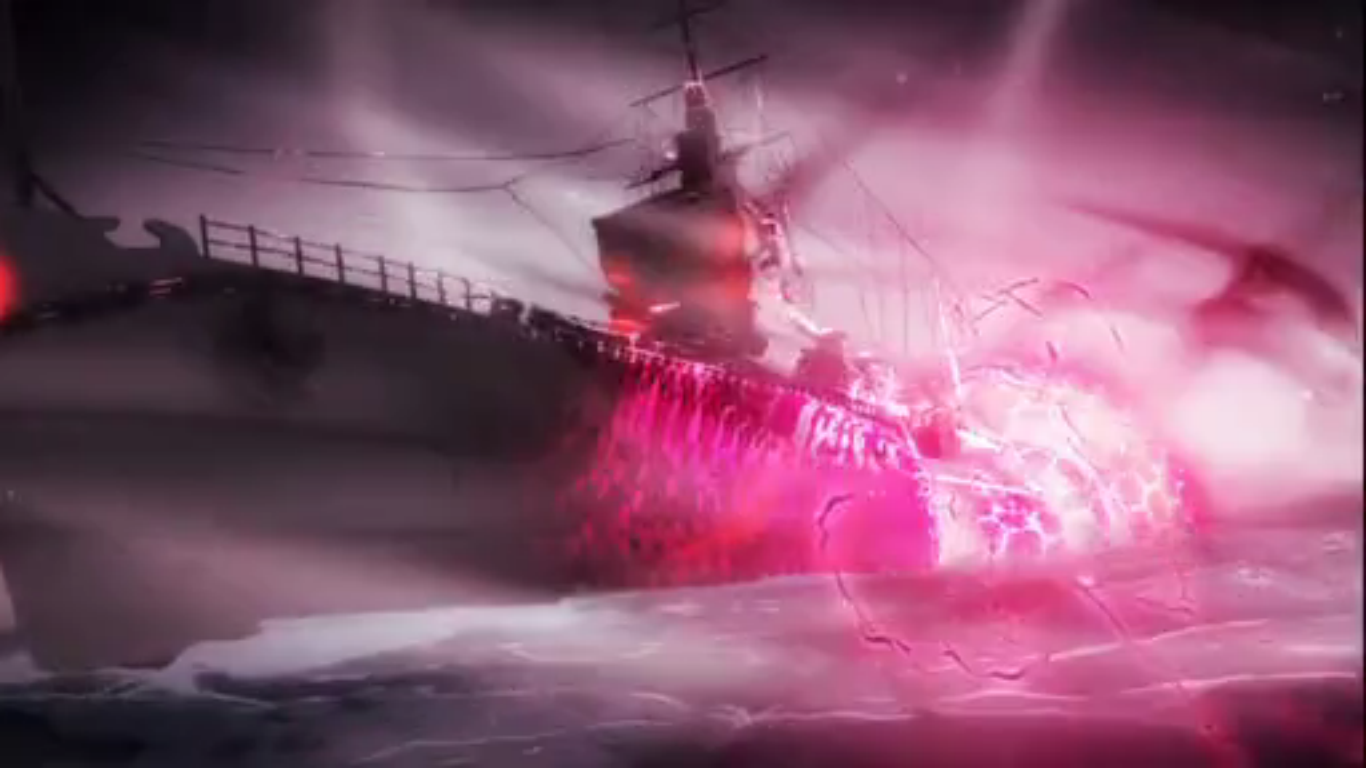
I put myself on the record this August saying that Arpeggio might be the Those Who Hunt Elves of the modern era, with the potential to sell well enough to launch an industry trend. Only this time with all-CG animation instead of late-night TV timeslots. The CG is still a tad weak when used for big movements, or presentation that would be more exaggerated in a hand-drawn series, and it took me about halfway through the episode to get accustomed to. But once I did, there was very little not to love. Kishi Seiji is doing a good job of keeping most of the body language to more small, natural-looking motions and making every frame of that count. The big flourishes were, as expected, saved for the naval battle sequences, which looked mighty fine. The story, a large-scale ambitious beast and looking to create a sci-fi world without putting everything in space, also appears highly intriguing. I’m looking forward to seeing how the crew, presumably a Nadesico-style quirky bunch of doers, gels together as a group as the series goes on. I’ve got at least 3 weeks worth of interest in this one.
Especially since these sub battles are going to be regular things
Oonuma Shin is sitting this season out, but one of the prospects at studio Silver Link got his crack at being in charge today. And the result was just as backgroundy as I could have hoped for. The intro was spiffy thanks to the scenery, and the rest of the episode carried on with a fun, slow pace with echoes of Hidamari Sketch and Yuyushiki. It’s getting 2 more episodes from me to see if it stays fun and consistent.
Speaking of typically one-director studios branching out, Unbreakable Machine Doll would be the only the second Studio Lerche project not helmed by Kishi Seiji. But it didn’t show much of a dropoff, and packed a mean punch with an early, fresh-feeling train action sequence. The steampunk setting seemed to offer some depth, but it turned out to be ostensibly just a battle academy series in the vein of Yugioh GX or Phi Brain, albiet with pretty action. I might have kept up with it in a less busy season, but right now I don’t see a strong appeal. Dropped.
In contrast to a sports-packed Saturday, Sunday’s lineup consisted mainly of more laid-back fare. Which in no way necessitates a drop in quality. At least, I believe all genres are created equal before they get executed by a particular staff. Today’s slate ended up being fairly satisfying.

 Animetics