Hanada Shonen-shi is an oft-overlooked series that holds a few unique fun-trivia attributes; it was one of the earlier shows in the awesome NTV 24:50 Tuesday slot and put up 3%+ ratings long before doing so was cool, and it’s got the only opener done by the Backstreet Boys. This brief spread talks about how the manga creator, Makoto Isshiki, was the one who pushed for that opener. There’s also an interesting comment on the voice actors practicing for a body-swap sequence. Not much text, but it’s neat.
Category Archives: Old Magazine Articles
Via Newtype USA: Yutaka Izubuchi and Ichiko Hashimoto on Rahxephon (February 2003)
Yutaka Izubuchi jokes about the length of the Eva manga, goes over designing his preferred style of face-bearing robot, mentions his Sunrise Production Planning Division connection with the director of Gundam SEED, and talks about getting gently nudged into the director’s chair by Masahiko Minami (President of Bones). Also, he get a pretty hilarious congratulatory card from Mamoru Oshii; “I don’t know why you don’t just quit… and don’t come crying to me when you fail!” More refuse for my “Is Mamoru Oshii just affecting that cranky demeanor he always has in interviews, rather than being legitimately bitter?” pile.
Via Newtype USA: Yousuke Kuroda and Yasunori Ide on Onegai Twins (November 2003)
Or: An article in which Yousuke Kuroda takes the time to tell blatant lies about Yasunori Ide within his earshot. It’s not something I see particularly often – the writer and director both get interviewed simultaneously and bounce off each other a little bit, giving off fun hints of the chemistry they might have had working together for two seasons on the same series. The two then talk about their desire to get away from typified one-keyword heroines and move towards less simple, more realistic characters (taking what may or may not be a subtle jab at 13-heroine Sister Princess in the process). The second page also has a blurb on the beautiful scenery of Lake Kizaki, the source of the franchise’s top-5 all-time background art.
Via Newtype USA: [inside] Gainax (July 2003)
Along with an understanding of the broader context of the subject, the most vital ingredient to good anime coverage is a reliable source. So when US journalists actually interview people on the production side in Japan, it’s generally worth noting unless the interview consists entirely of fluff. This is the third of what will hopefully be a couple more posts archiving articles from Newtype USA’s [inside] series of articles written by Amos Wong. This one features Gainax president Hiroyuki Yamaga on beating game companies in their own arena to stay afloat financially, seeing Eva mentioned in pop culture, and his opinion on the best way to target overseas fans.
Note: Pictures are scans of the article made on my crappy scanner, which cover the article text but not the entire page. Apologies for that. Scans after the jump, along with comments on the contents of the article.
Via Newtype USA: Taniguchi Goro on s-CRY-ed (July 2003)
I’ve been collecting a bunch of old Newtype USA issues off of ebay lately, with the goal of eventually uploading scans of most or all of the [inside] series. The next batch arrived at my apartment yesterday, and in addition to an article on Gainax with an offhand mention of mid-90s OVA budgets, it contained this feature on s-CRY-ed with a number of comments directly from Taniguchi Goro. Even though there’s not a lot of historically notable material in there, there’s interesting s-CRY-ed specific stuff; focusing on hand-drawn art against current industry trends, struggling to translate the core concept into a coherant final story, being surprised that a series he tried to make as manly as possible ended up with a majority female fanbase, and the offhand comment that turned into the OST track In His Memory. It’s something I personally enjoyed reading, as a huge s-CRY-ed geek. Scans are after the jump (statements from Goro are all on the fourth page).
Via Newtype USA: [inside] Toei (December 2003)
Along with an understanding of the broader context of the subject, the most vital ingredient to good anime coverage is a reliable source. So when US journalists actually interview people on the production side in Japan, it’s generally worth noting unless the interview consists entirely of fluff. This is the second of what will (hopefully) be several posts over the next couple of weeks archiving articles from Newtype USA’s [inside] series of articles written by Amos Wong. It contains comments from President Hiroshi Takahashi and Director Daisuke Nishio on researching how to best portray action sequences, overseas sources of income, and the pluses and minuses of the transition from analog to digital animation.
Note: Pictures are scans of the article made on my crappy scanner, which cover the article text but not the entire page. Apologies for that. Scans after the jump, along with comments on the contents of the article.
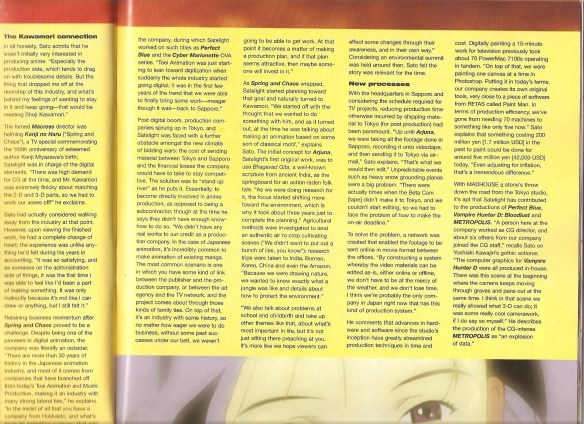
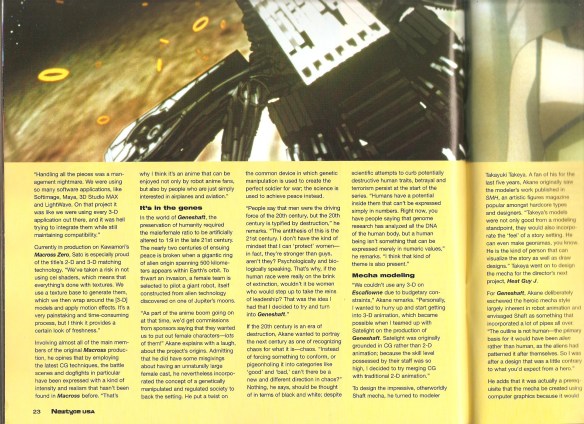
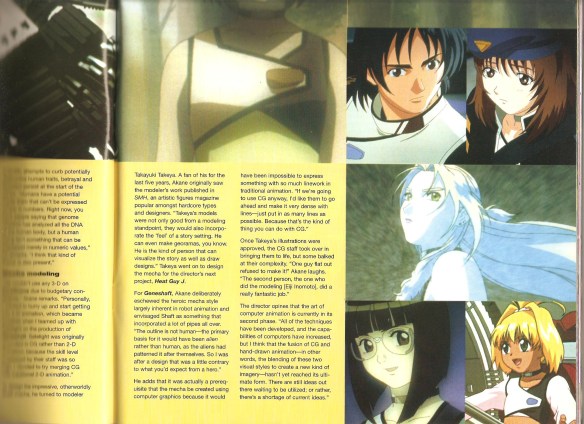
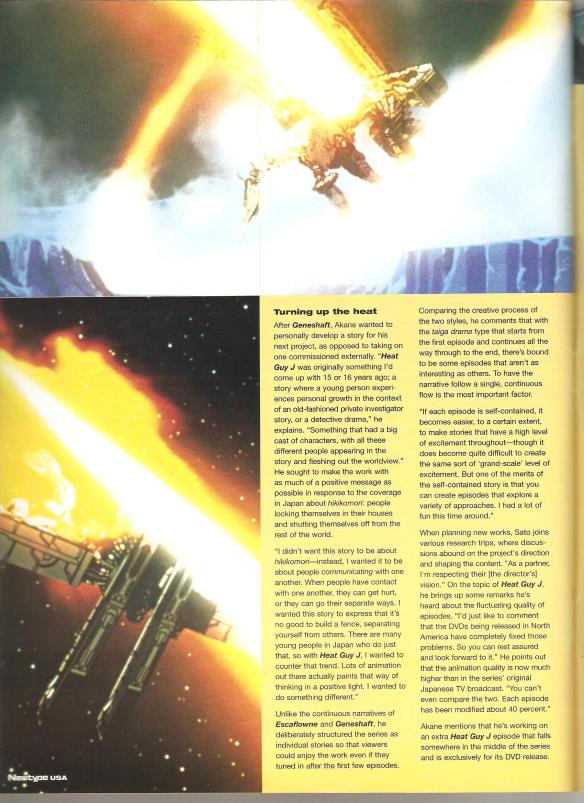
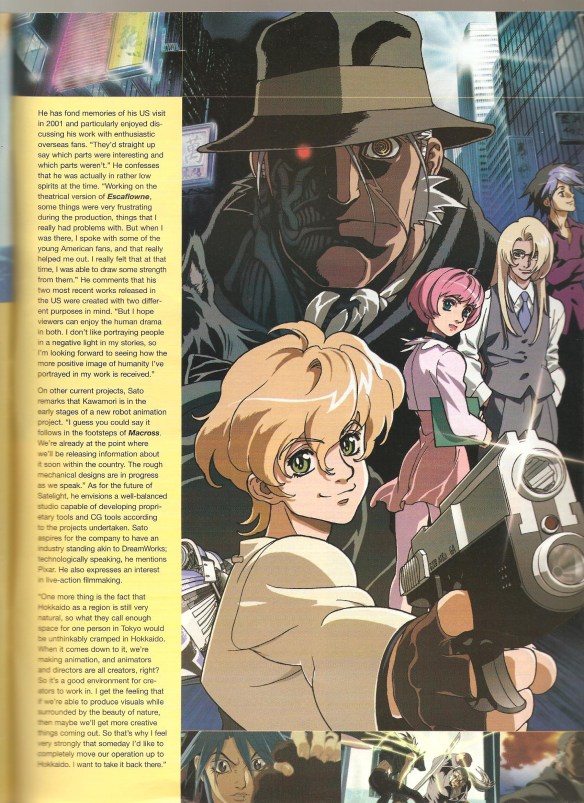
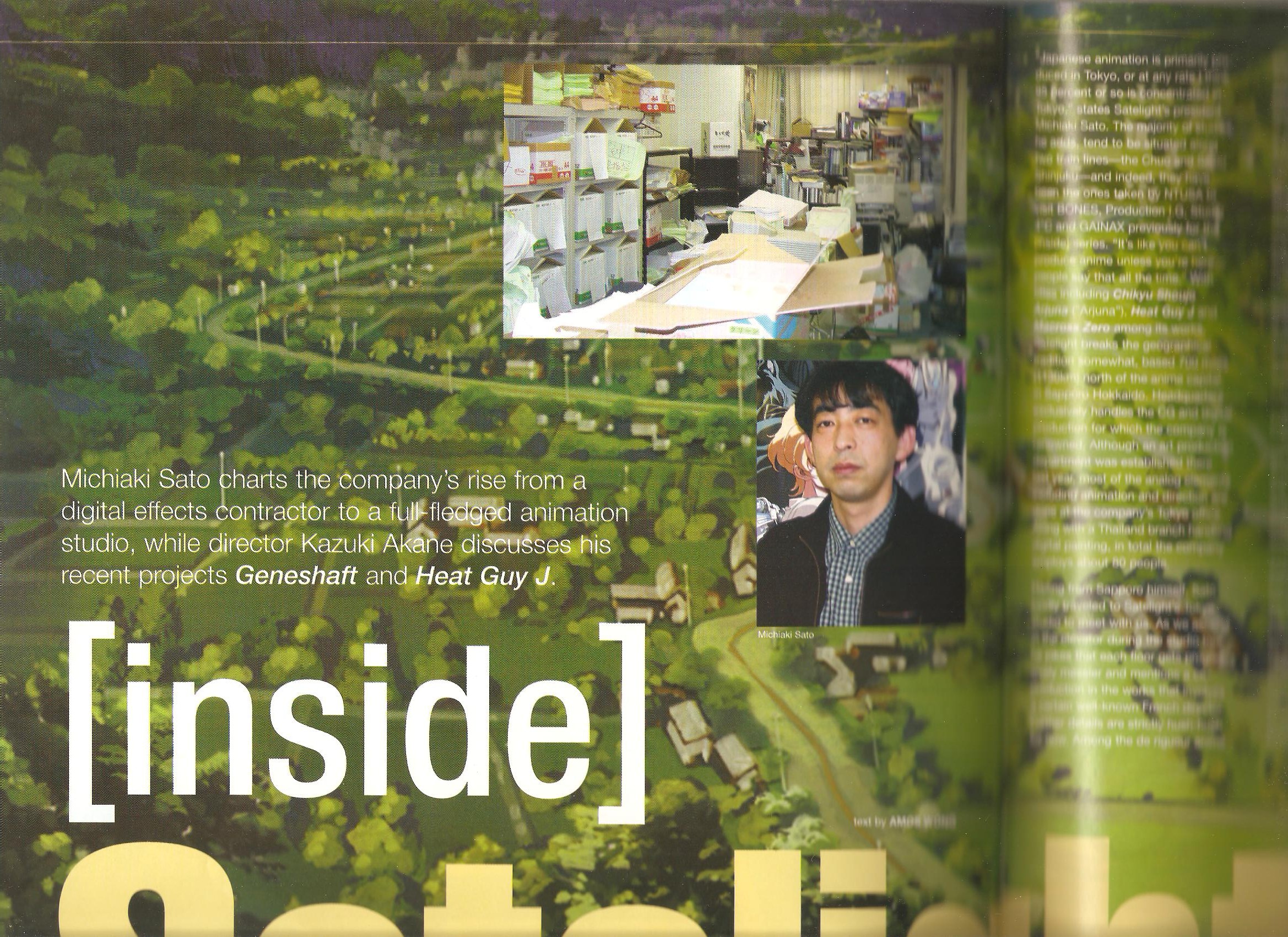
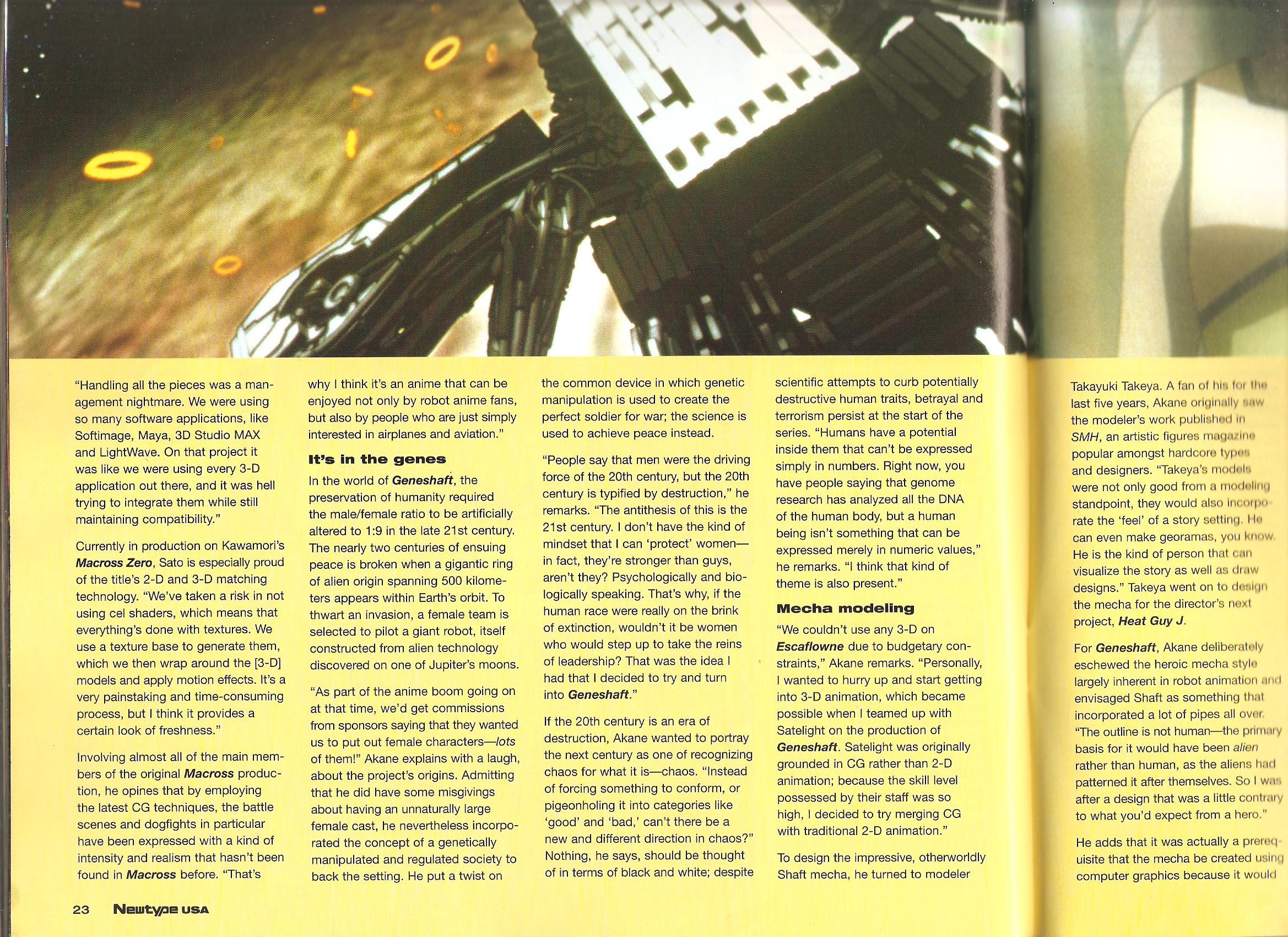
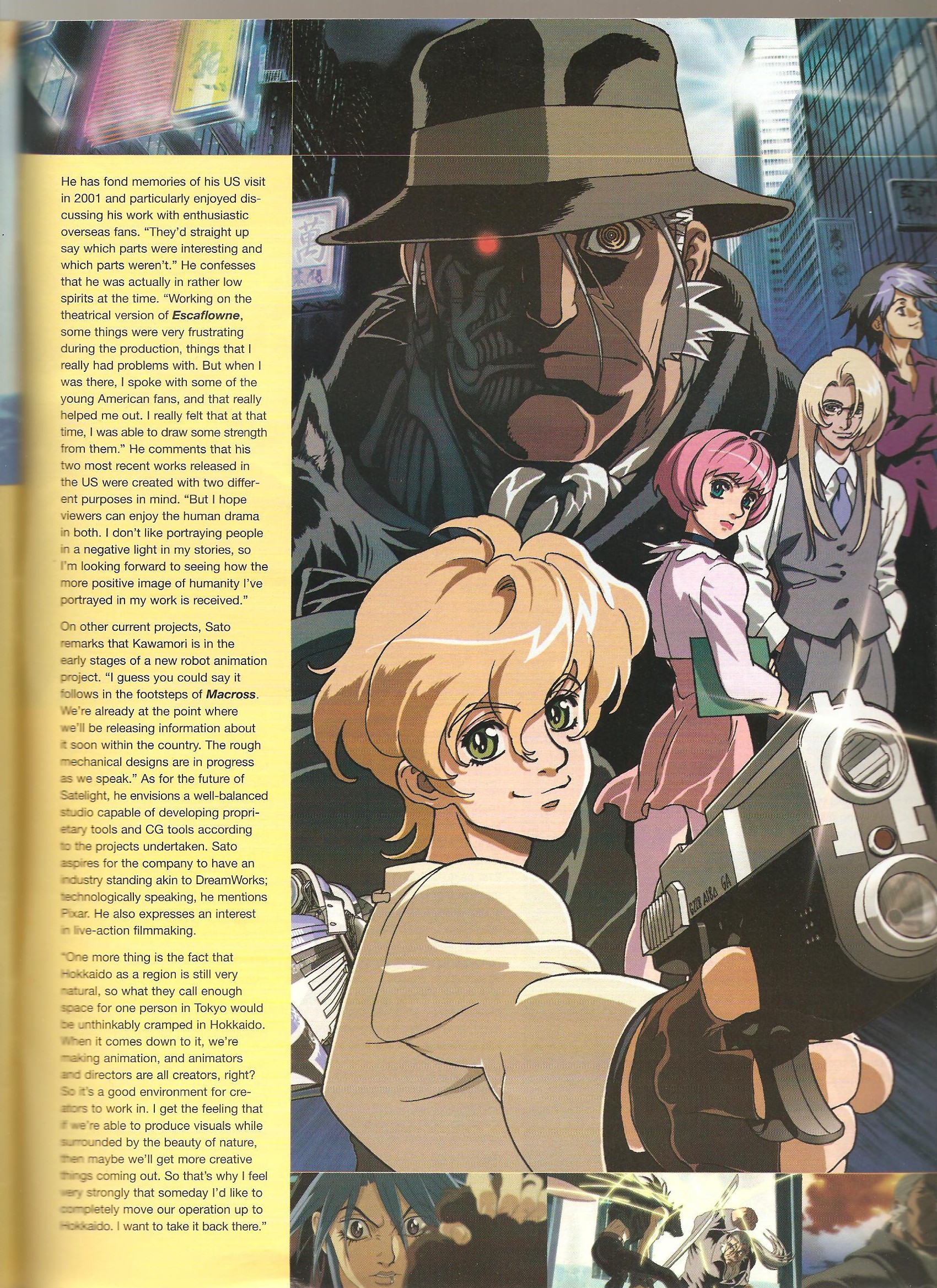
Via Newtype USA: [inside] Satelight (September 2003)
Along with an understanding of the broader context of the subject, the most vital ingredient to good anime coverage is a reliable source. So when US journalists actually interview people on the production side in Japan, it’s generally worth noting unless the interview consists entirely of fluff. This is the first of what will (hopefully) be several posts over the next couple of weeks archiving articles from Newtype USA’s [inside] series of articles written by Amos Wong. It contains statements from President Michiaki Sato and Director Kazuki Akane on how the studio went from subcontractor to full-time anime studio and how they handled the increased demand for female casts in the millennial anime boom.
Note: Pictures are scans of the article made on my crappy scanner, which cover the article text but not the entire page. Apologies for that. I have also transcribed the article after the jump to make for easier reading (though I probably won’t be doing so for other articles due to the time involved). Also note that each part of the article is a two-page spread, so page 19 comes before 18, 21 before 20, 23 before 22, and 25 before 24.