It seems like a bit of a truism to say that SF has changed significantly since the beginning of the show. While it’s true that the show has upped the ante in a number of ways since the main duo defenestrated a gorilla, the change in the core of the show has been a little more delayed and tougher to identify. Before the obvious change, and even immediately after, the show was weird in a quirky kind of realistic downbeat humor. Then things got serious with King Torture, but now that that’s past, the show doesn’t seem to be going back to that kind of small-things approach. Instead, we got Red Axe in full costume and a helicopter tapping Masayoshi to lead a fight against alien spore warriors apparently created by a combination of alien spores and Sketch Turner.
Tag Archives: Anime
Lists Are Fun To Make: Clutch BGM of 2013
I haven’t been writing much on it lately, but I’m a firm believer on the power of a soundtrack (and good sound direction) to either give a show the last little push it needs to get to 10/10 quality or kneecap a show that could’ve been a contender. With that in mind, here are 10 tracks from 10 different 2013 anime I thought turned particular scenes into memorable standouts.
First Reactions: Kyoukai no Kanata Episode 12 (End) and Quickie Scores (6/10)
I suppose I could wait until dishing on the episode itself to call this show a disappointment, but that is what it is. The shoddy serious plot handicapped a fun cast and a skilled director, and ultimately had no implications on how the story ended. There was a lot of pain and suffering to return to a status quo that would have totally still been maintained without said pain and suffering. Effectively, the whole of the nonsense that the people nominally trying to prevent a disaster caused resulted in the titular youmu being sealed (perfectly safely) right back inside of Akihito.And that wasn’t even the most bald-faced part of the script. The straight-up ass pull to revive Mirai at the end was considerably. In these past 3 episodes, she’s been dead, not really dead, dead again, and not really dead again. And that final example happened for no reason in the context of the story, beyond the meta one that the main heroine needs to be alive to bait people for a sequel hook.
First Reactions: Arpeggio of Blue Steel Episode 11
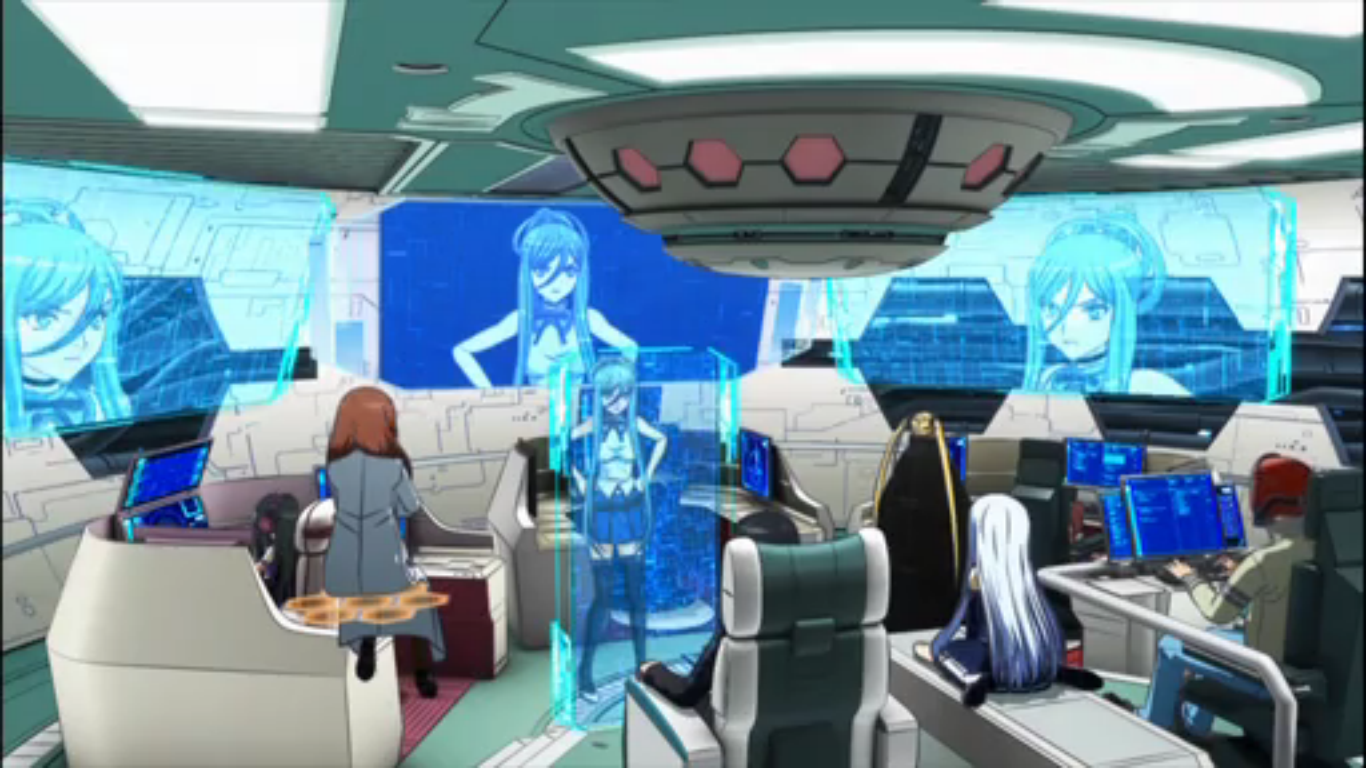
If it hasn’t been abundantly clear, I love the way this show just faces 12 o’clock down a straight line and does what it wants with supreme gusto. Lining up 22 frickin’ battleships in a row and sweeping them like bowling pins with a combination of Space Battleship Yamato’s wave motion gun and Initial D’s inertial drift was an excellent way to start the episode off. And that testosterone-pumping curbstomp was followed by a hilarious exchange; the two-second fade to a sad ditty when Takao was mentioned only for her to show up and point out she wasn’t dead was a great way to get mileage out of last week’s overly melodramatic sacrifice scene.*
Fun With Numbers: Thoughts On the Tamako Market Movie
Correction: Blood-C had a lower average (1577) than any of the series mentioned below, though its movie was announced in advance of the TV show.
So Tamako Market is getting a movie, and fairly soon (this April), at that. I’m nothing but excited at this news; of the shows that aired last winter, Tamako Market was probably my favorite. It had a colorful cast, a very nice soundtrack, and an adorably chubby, pompous bird. But the fact that it’s getting a continuation is a bit striking, in light of recent history.
The final average for Tamako Market’s per volume sales clocked in at about 3624, above the 3000 pvs benchmark but considerably below the sales levels of other franchises that got movies while averaging TV ratings of less than 3% (i.e. excluding Pretty Cure, One Piece/battle series in general, and Lupin III). From 2005-2012, the next lowest-selling series to get movies were Bodacious Space Pirates (7337), Hanasaku Iroha (8576), and Star Driver (9075). All the others sold in excess of 10,000 copies per volume. That’s a pretty huge gap – the next-lowest series in that group sold roughly twice as much!
So why is it getting a movie? I can think of at least two plausible explanations:
Fun With Numbers: Guesstimating the Break Even Point of English Dubs
If you’re familiar with the Japanese anime sales figures I sometimes look at, you may be aware of something called the break-even point, a rule-of-thumb figure that sets a general line between profit and loss for a given show at 3000 disks sold per volume. (The math is fairly elementary. At 10 million yen per episode, 12 episodes cost ~120 million yen. Selling 3000 copies of 6 disks at 7000 yen per disk nets a gross profit of 126 million yen. While that number varies depending on things like show budget, alternative income sources, and how many episodes are packed into a volume, it’s good to have a rough number in mind because it sets a scale for what constitutes success and failure for a show. But what does that number look like for the U.S., and what does that say about the comparative purchasing power of western fans in general?
First Reactions: Samurai Flamenco Episode 10
This show seems to be getting returns on everything. Way back in episode 4 when Mari was introduced, it seemed like her too-aggressive side was ultimately going to be used for comical purposes, and would ultimately end up being the umpteenth example of the stereotypical angry, overaggressive girl. That characterization choice, while irritating at the time, yielded huge dividends this week, as King Torture took only a few minutes to shred Mari’s heroic resolve to pieces.
It was a scene every bit as creepy as the picture implies
In an episode where Goto was driving a jeep off a cliff into a missile, KT was swapping his hand for a chainsaw, and Masayoshi humbled up a bit after understanding how much he needed people’s support (though that element could have been played for better development if they had really tried), what I really can’t get over is how much I like that scene with Moe and the pliers. Because of how deep-cutting KT’s words and actions were to Mari, and because of the quiet strength supposedly shallow Moe showed while her finger was getting the steam press. One of the nice things about scenes like this is that they can reveal hidden depths to characters you didn’t think had them. More so than any other part of the continuation (including Masayoshi’s unmasking), I want to hear the next conversation those two have.
First Reactions: Kyoukai no Kanata Episode 11
From the beginning, Kyoukai no Kanata reminded me of a mid-major series; the type of show laced with explosive potential and nuclear flaws for which execution makes the difference between all-time and forgettable. There are many of these types of shows, though comparatively few that I’ve followed this season.* And while they might not always end up being entertaining to watch, they’re always very enlightening to discuss, because they’re the easiest case studies for the difference execution can make for the same core set of ideas. This show fits that paradigm to a T; it has a very definite set of strengths and weaknesses, and does not understand what they are. An episode that stuffed in some questionable presentation choices with very genuine moments from the main cast served to underscore that core issue.
First Reactions: Arpeggio of Blue Steel Episode 10
I have to admit, I was expecting a lot more of this episode to focus on the rest of the cast’s effort to rescue the now-submerged Iona and Gunzou. I wasn’t expecting, or even really hoping for, a focus on those two. But that’s the direction the show decided to go in, and it produced an outstanding piece of work as a result. There were a few moments where they went a little overboard with the drama (Takao’s sacrifice laid it on pretty thick), but the majority of this episode was quietly stuffed with character detail for Iona and Gunzou.
Fun With Numbers: Anime as Manga Advertisments in 2012 (and their respective myanimelist ranks)
Update 2 (July 15, 2014): New, more accurate data is here.
Update (Jul 1, 2014): This post doesn’t measure releases in 2-week totals, which turns out to be a huge deal in many, many cases. I’m currently working on an updated version of both this and the 2011 data. Just be aware of that before citing the data from here regarding any one show.
By all rights, a 30-series sample like the one I had for 2011 was enough to get most of the relevant information regarding how anime boosted manga sales. However, during that analysis, I bumped into an incidental correlation, myanimelist ranking versus gain in manga sales, that was far too juicy to ignore. If that correlation is real, it points to a very tangible link between the Japanese mainstream community (who have enough disposable income for manga but not for anime) and the English-speaking online community (who generally pay a comparable pittance, if anything, for the anime they watch). But I couldn’t be sure from just the 2011 data, since that was the sample that gave rise to the theory. So I did what any good researcher would do, and pulled another year worth of data to see how things would match up. The results can be found on this spreadsheet, and are sorted in order of descending myanimelist rank below.