First Reactions: Samurai Flamenco Episode 3

As much as Samurai Flamenco still seems to lack a good dramatic soundtrack, it doesn’t much matter when it keeps the focus on comedy and brings those cranky accordions to the table. That dimension of the series seems to be becoming more prominent, as the cast added another awkward adult. And it should be mentioned that Goto is looking like less of a traditional straight man as time goes on.

Samurai-3-2

Continue reading

First Reactions: Kyoukai no Kanata Episode 4

Last week, I had Kyoukai no Kanata pegged for an episode full of awesome combat choreography. The first half was just that, a chase through a labyrinth of jumbled escalators mixed with argumentative running and some clever action that screwed with my sense of direction to all hell while never losing me entirely. It definitely helped that the banter, both between Mirai and Akihito and between the siblings when they cut away from the main action, felt as natural as could be. I wouldn’t say the show is firing on all cylinders, but there’s definitely a piston pumping that engine full of organic uncertainty. Continue reading

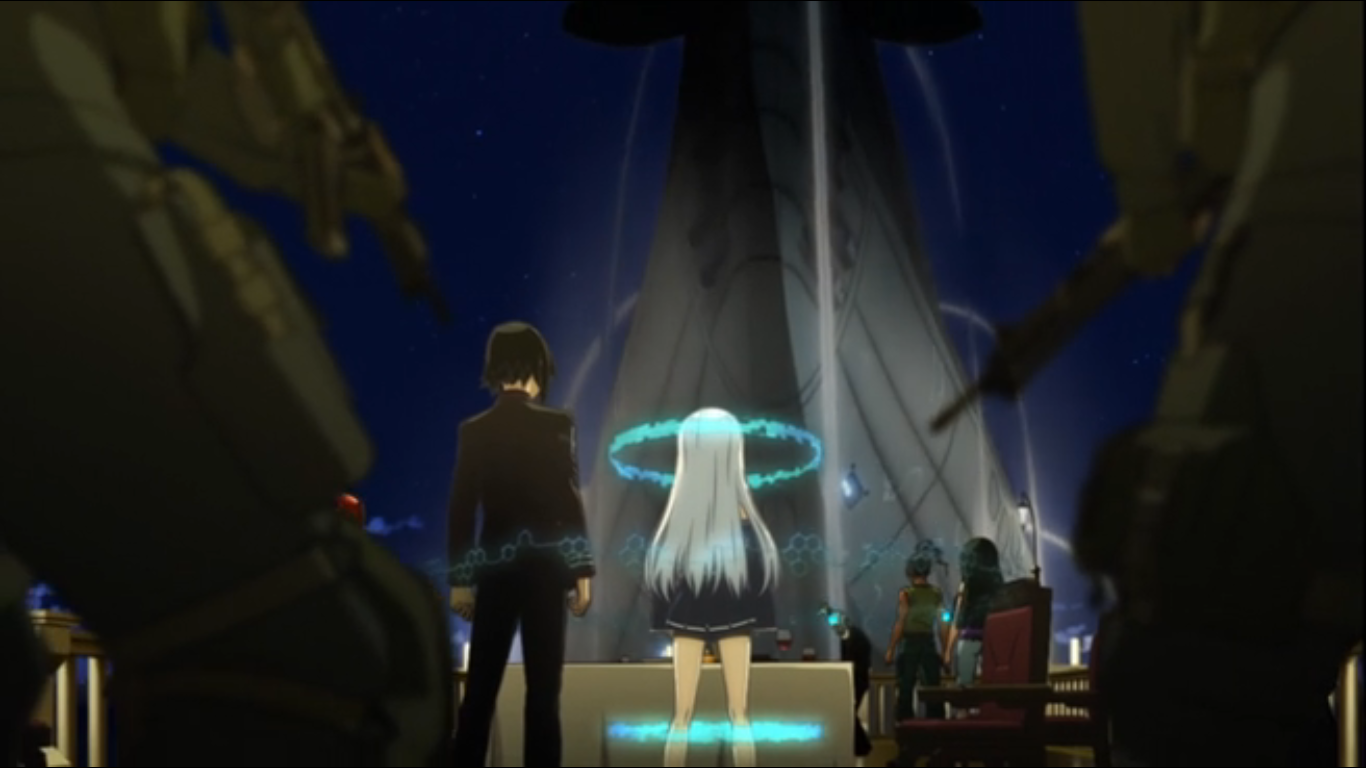
First Reactions: Arpeggio of Blue Steel Episode 3

Arpeggio continued to impress this week by folding in some well-placed imagery and bringing along a Greek chorus to the battlefield. It’s the first TV anime I’ve seen in a while that really feels like it’s bringing the best aspects of anime movies to the table. And it’s doing it while continuing to post legitimate heat-check tier numbers in the marketplace.* The 3D still isn’t 100% perfect**, but things that were kinks even as recent as last episode were ironed out, and the sense of spectacle is exactly where it’s been.

Arpeggio-3-2

Continue reading

First Reactions: Kyoukai no Kanata Episode 3

I’m cutting off my entries on Outbreak Company. I don’t have enough time to blog 5 shows and process the sequel data I’m working on. That show is still enjoyable on a baseline, and the main character can definitely hold his own weight, but it tended too heavily towards melodrama at the wrong time more than once.

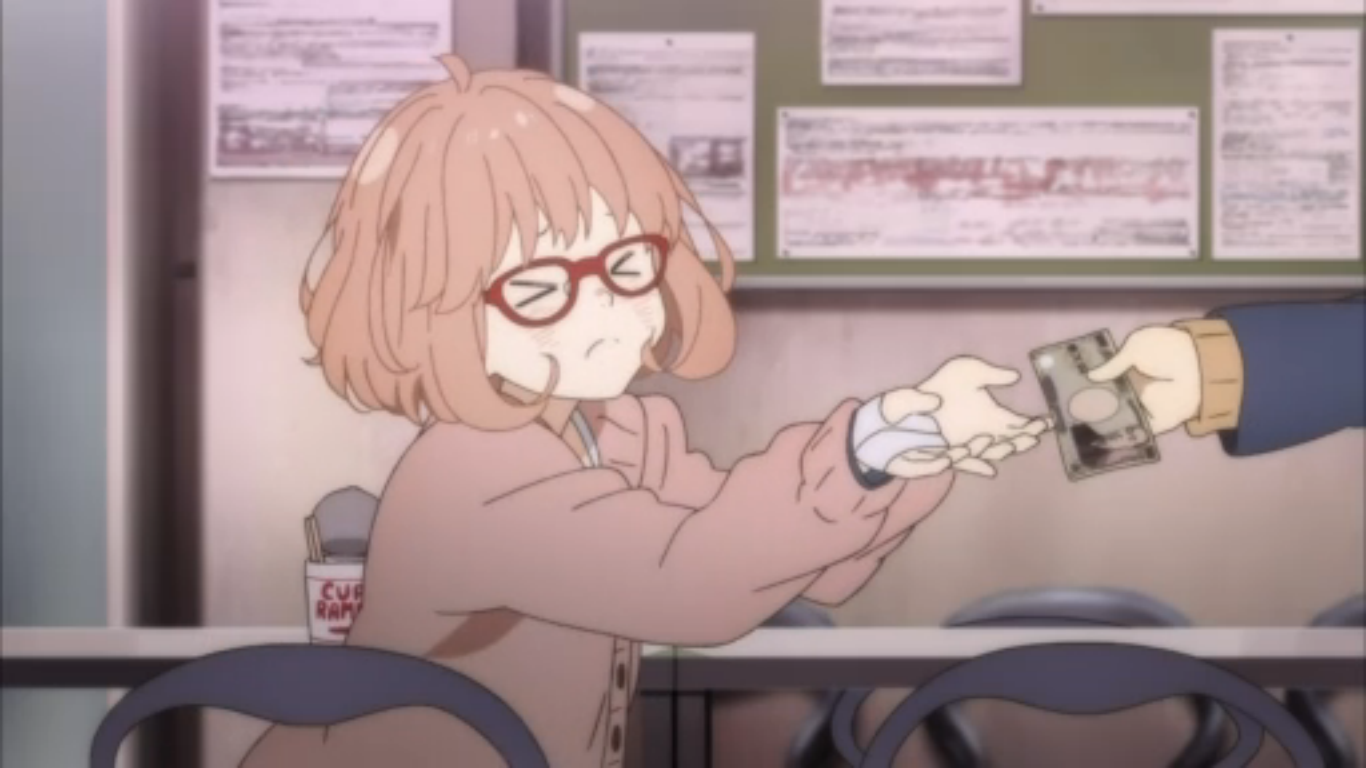
Sticking with Kyoto Animation’s latest work, though. Kyoukai no Kanata’s preorders thus far has been something less than stellar, which matters from a business perspective, and very much from a “will the story be continued?” perspective. I do pity Ishidate Taichi,* but it certainly adds to the humor value of this screenshot:

Kyoukai-2-2

Doesn’t mean it can’t still be great.** Between the dialogue (particularly between Akihito and the Nase siblings) and the scenes with the rest of the cast casually weathering the Moonlight Purple Overdrive storm indoors, I enjoyed this week’s episode quite a bit.

It’s certainly not hitting home runs with the story, though. Taking revenge for a dead friend is fairly standard battle series fare. I’m more looking forward to how they deal with a theoretically difficult foe. The appeal of such a series, and KnK is very much aiming to be one, is twofold; the characters bouncing off each other and the creative ways they come up with to work their way out of increasingly more desperate mismatches. I’m sold enough on the cast, so the bigger risk I see for it coming up is how they handle the fight choreography in episode 4.***

*As the assistant director of Nichijou and the project head here, he has a big hand in two of their 3 major commercial flops. It also should be noted that any bemoaning or celebrating the failure of Kyoto Animation on a macro scale because of KnK’s micro failure is likely overreaction. Their business practices, particularly their brand management, have gotten smarter after Nichijou, which means they’re very well set to deal with a few failures en route to putting another entry in the all-time top 50 selling anime. Flopping was a much bigger deal when Nichijou happened and too many people, even some smart ones inside the industry, fully expected that they would succeed 100% of the time.  Even Jordan’s ’95-96 Bulls lost more than 10% of their games.

**So long as it doesn’t end on a cliffhanger that it won’t be able to resolve.

***I’m fairly confident, chiefly because the chase-combat in episode 2 was nailed down.

First Reactions: Samurai Flamenco Episode 2

This episode was playing two games at once. It made the point early on of introducing the idol trio and manager who figure into the OP and will presumably bigger players in time to come, and then followed up with ten minutes of juicy irony on umbrella theives. It’s a shame it couldn’t do both of those things at once, because that would have been one thing to add a serious spark to what is looking like a fair-sized puddle of oil this point. As it stands, while I’m enjoying the “don’t quit your day job” workplace elements of the show, I hope the show eventually evolves past a straight split between elements. If it can do that while still preserving the sad-adult feeling Goto and Masayoshi give off, it’s set for the next 6 months.

Flamenco-2-1

Continue reading

Fun With Numbers: Explaining Why Unpopular Anime Get Sequels

If there’s an inverse situation to not seeing a sequel to something you liked that you know was really popular, it’s getting a sequel when you in no way expected one. Disc sales are a pretty good indicator of when something is commercially viable enough to get a second season, but they aren’t the only factor playing in. There are a couple of consistent ways that anime with non-profitable sales wind up with more than one season, and that’s what I’m looking at today. Examination of the ones that did sequel reveals a rather unsurprisingly grim prognosis for fans of old, poorly-selling shows hoping that they’ll get more.

Continue reading

Fun With Numbers: Explaining Why Popular Anime Don’t Get Sequels

There are few things more frustrating than loving an anime that has room to grow as a story, but never gets beyond one season of material. It’s arguably even more of an irritance when you know the second season would easily pay for itself. Fortunately, it’s very rare for popular anime to not get sequels (happens only about 20% of the time), and there are ways to predict which ones those will be. I like to think knowing softens the heartbreak.

Continue reading

First Reactions: Tokyo Ravens Episode 2

I’m a bit less sure that I know what I’ve got with this show after two episodes; the second one mixed in a lot of of new elements, some more surprising than others. It’s still introducing of its story elements without getting infected with proper noun disease, which is a plus. Still looking forward to it, but a lot of what I’m assuming would develop into plot elements is still covered in question marks.

Continue reading

First Reactions: Arpeggio of Blue Steel Episode 2

The first episode of Arpeggio was very much an introductory one a few very high-octane minutes followed by an origin story for the main characters and their supertech submarine. That expositional phase of the series apparently mostly ended last week, as this week’s episode was what I would guess will be the meat of the series; naval combat that was as snazzily animated as it was thought out and tense.

Arpeggio-2-1

Episode 1 also brought some predictable backlash, with many commentators criticizing the full-3DCG animation style. Personally, I have the same stance on it that I had on Kaiji (loved it), Aku no Hana (not a huge fan), the cars in Initial D (Eurobeat), and many other shows with atypical artstyle. Choosing to be different means nothing, it really comes down to how well it gets executed. So far, the show’s been doing a more than respectable job of that. Meanwhile, the market continues to speak for itself, as the BD for the show’s first volume is currently the 8th-most preordered one of the season and rising in spite of a significantly shorter solicitation time.*

Continue reading

Fun With Numbers: Explaining Yozakura Quartet’s Second Season

A little over a week ago, I wrote about how seemingly improbable this season’s Yozakura Quartet sequel was. It was anomaly, lacking any of the traditional indicators (profitable disc sales, TV ratings in excess of 3%, visible boost in the sales totals of the manga). Or at least it was until you look at the unique way in which the most recent series of OADs was marketed. As it turns out, the Yozakura Quartet OADs, though failing to chart, were very probably profitable. The makers made their dues by exploiting a bit of a backdoor in the niche anime industry: piggybacking on the much larger manga market.

Continue reading