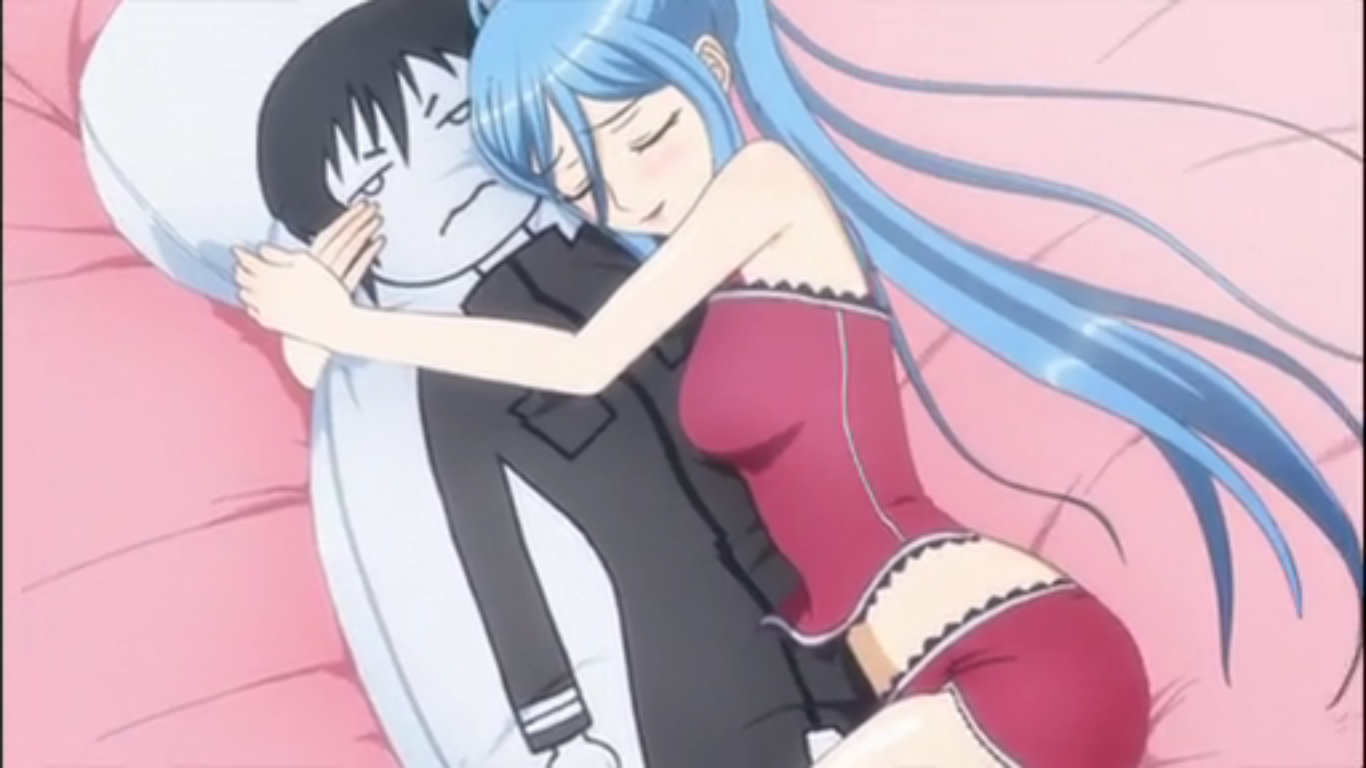
First Reactions: Samurai Flamenco Episode 7

This is only the second episode of the year to which my immediate reaction was to go back and watch the whole damn thing over again. While the last four minutes of it will understandably get the most attention, that was by no means the only part of the episode that wowed. There was so much stuff happening this episode, well beyond the typical level of “everyone doing their own thing” that characterized the episodes introducing the Flamenco Girls. Looking back on the episode a second time, it’s actually pretty clear that most elements of this episode were there to bring the first, more realistic portion of the series to a close while still keeping some compelling elements simmering. Because while the choreography of the fight scene in the final minutes was delightfully down to earth,* that doesn’t change the fact that it was against a man who had animorphed into a mechanical gorilla with a guillotine in its chest.

Flamenco-7-1

Continue reading

First Reactions: Kyoukai no Kanata Episode 8

I wasn’t particularly looking forward to the show’s promise of more plot, and this episode was more or less what I expected in that regard. The worst part was the scene with Miroku in the car with Mitsuki. Is it really necessary for this show to force its title down my throat with a bunch of terminology? Do they really need to go that far out of the way to explain the concept of a super-S class demon to an experienced audience? Though, granted, a lot of that scene was the shadowy organization’s Miroku spewing bull intentionally to throw the protagonists into confusion. There have been many, many better monologues this year alone; his was just poorly presented, opaque foreshadowing.

Kyoukai-8-4

Still, at least it was more subtle than the imagery surrounding Akihito’s flashback sequence.

Continue reading

noitminA Has Nothing on the Nihon TV Tuesday 24:50 Slot

One of the fruits of digging into the adaptations of manga produced in 2011 has been a treasure trove of TV anime ratings data. Which, in turn, holds heaping helpings of unrelated but utterly fascinating information.

My favorite tidbit so far? Timeslots that get designated to run a certain kind of show are much more prevalent than I, at least, had thought. People may deify noitaminA for its stellar pre-Fractale record, but if you want to talk anime-focused timeslots with godly 7-year runs, there’s at least one very prominent contender. The Nihon TV 24:50 timeslot (plus/minus 10 minutes, depending on the quarter) hosted the following shows from 2000 to 2011:

Show Title (Airdates) (Ratings for First Episode)

Hidamari no Ki (2000-04) (3.2)
Hajime no Ippo (2000-10) (4.8)
Tenchi Muyo GXP (2002-04) (4.3)
Hanada Shounen-shi (2002-10) (3.1)
Air Master (2003-04) (4.4)
Captain Harlock [TV Airing of Endless Odyssey OVA] (2003-10) (3.4)
Gokusen (2004-01) (3.8)
Monster (2004-04) (3.2)
Akagi (2005-10) (2.4)
Ouran High School Host Club (2006-04) (2.1)
Death Note (2006-10) (3.4)
Buzzer Beater (2007-07) (2.5)
Kaiji (2007-10) (3.2)
Real Drive (2008-04) (2.0)
One Outs (2008-10) (2.5)
Souten Kouro (2009-04) (2.6)
Kimi ni Todoke (2009-10) (2.8)
Rainbow (2010-04) (2.2)
Kimi ni Todoke [cut reair] (2010-10) (2.1)
Kimi ni Todoke Season 2 (2011-01) (2.1)
Kaiji Season 2 (2011-04) (2.3)
Chihayafuru (2011-10) (2.4)

Note in particular the period from 2004 to 2011. That’s some serious all-around ass-kicking, a double whammy of ratings that aren’t bad (especially for 12:50 in the morning) and maximal critic-pleasing potential. By all accounts, this timeslot is currently plugged; Chihayafuru’s second season aired at 25:59, and I can’t find anything currently airing in it. But still, phenomenal run. I guess I’m adding timeslots to the list of industry-related things that really ought to be looked into.

Edit: Corrected the title to reflect the actual day of the timeslot.
First Reactions: Arpeggio of Blue Steel Episode 7

One of the fun things of reading a manga or watching an anime that didn’t start out with a rock-solid grasp of its own identity is the sometimes-futile-but-always-amusing attempts to meld a bunch of disparate elements together into something that feels like a complete product. Maybe it’s just that I prefer mixed genre shows to pure cases of one element, but I, at least, gravitate towards shows that have that organic feel. It’s one of the reasons I like mid-tier monthly manga so much; between their loud, energetic character types and their solid+ grasp of visual techniques, they hold a little more intrinsic cohesion than the field. Put another way, you can mix vastly disparate genres provided your characters are amusing and your visual acumen is there.

Arpeggio-7-1

Hence the candid camera

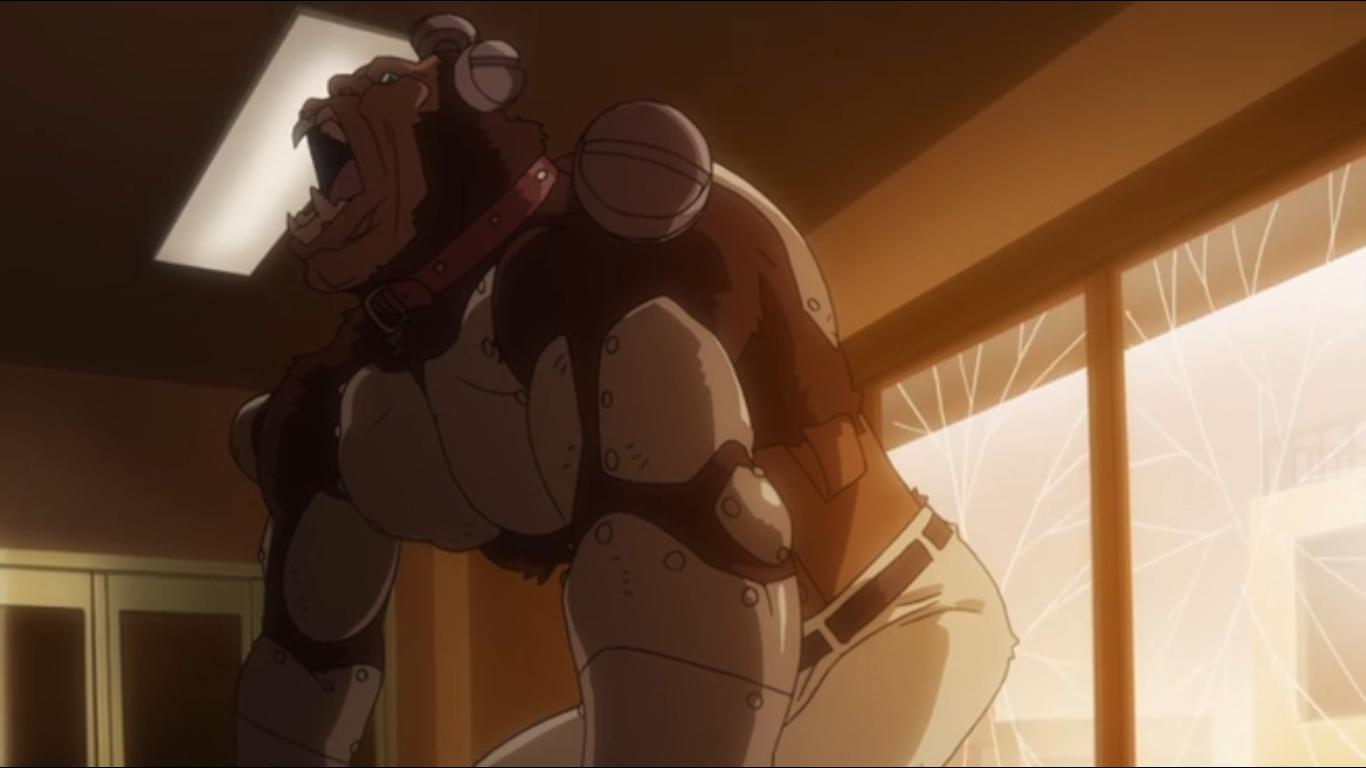
And this was the week Arpeggio really flashed its chops in that regard. Already having solidly established the show in the naval combat department, the Kishi/Uezu team really embraced the harem comedy components of the show this week, and the result was pretty much up to their track record, an effective combination of character-centric gags that cleared the air after last week’ darker dramatic turn.

Continue reading

First Reactions: Samurai Flamenco Episode 6

Insofar as this show appears to be attempting to dial up the zany each week, this episode’s chase scene/gadget showcase definitely qualified as an upgrade in that department. For one thing, chase scenes are just intrinsically great ways of continually feeding tension, and the stakes (Masayoshi’s identity against 10 million yen) were plenty high. For another, there’s something intrinsically fun about watching a guy casually dodge bodies while talking on the phone.

Flamenco-6-1

Continue reading

First Reactions: Kyoukai no Kanata Episode 7

This week Kyoukai no Kanata decided to start facing up to some of the loose ends it dropped during the Hollow Shadow arc. One of them, Sakura’s murky quest for revenge, was more or less fully dealt with. After a little bit of action, it became clear that a) she was totally outclassed by Mirai and b) she wasn’t so much hell-bent on revenge as she just needed an outlet for her grief. It was fairly refreshing how they wrapped things up quickly and didn’t force the miscommunications any longer than they had to.

Continue reading

First Reactions: Arpeggio of Blue Steel Episode 6

Though this week’s episode featured a battle about as explosive as the rest of them in the series, it lacked the punch of episodes 2 and 4. The main reason for that is that, while the first two battles were tactical affairs that featured Iona’s crew out-clevering a superior force, this fight consisted mostly of Haruna holding off ground forces with a nanomachine double and some magic force fields. And some scenes of Kirishima fighting as a stuffed bear; to be fair, that was a pretty cool usage of a character who was overacted in the first place.

Arpeggio-6-1

This week also saw a wrapping-up of the mini-arc featuring Haruna, Kirishima, and Makie’s newfound friendship. The whole arc was pretty standard “aliens befriending humans” stuff, and I don’t have too much to say about that. It’ll be interesting, though, to see how those three mesh with Iona’s crew as they all head towards where Takao is now being presumably imprisoned.

Midseason Update: This Fall in Kaiji Quotes

In Fall of 2007, I was very much a beginner at anime. I’d explored the discount stores in my neighborhood and encountered some very interesting, engaging titles, but I wasn’t any kind of plugged in to what stuff was current. One series changed all that, basically on its own.* Gambling Apocalypse Kaiji was the complete package in so many ways; tense, human drama, a rich cast that skirted the line from likeable to detestably inhuman, tight direction, idiomatic yet pithy dialogue, and the best narrator in anime bar none.

Midseason-Fall-4

Those last 2 attributes also make the show handy for an alternate purpose; rampant quotation abuse! There’s a Kaiji quote for everything, and the Fall 2013 anime season is no exception. In celebration of the show’s free availability on crunchyroll, let’s break it down.

Continue reading

Manga Chapter of the Week: One Outs Chapter 168 (Last Game – Laurels)

I’ve been slacking on my CotW features recently, and I apologize. There are 2 excuses I have. First, I’ve been busy, both getting the podcast running again and  Second, sometimes I just don’t end up reading a chapter of manga in a given week that makes me particularly passionate. I only read about 20-30 chapters of current stuff a week and generally have 1-3 marathon series on my back burner. Recently, I’ve been reading Part 5 of Jojo’s Bizarre Adventure and Takano Ichigo’s Orange. Both were good manga, and I might have more to say about them in the long run, but there wasn’t one point in either of them that jumped out as self-evident greatness.

But a win-obsessed former bottom-feeding baseball team led by a charismatic pitcher-owner winning the pennant by taking 3 games in a row, on the road, against the team that ultimately finished in second place? While spoiling their opponent’s victory party each time? That’s some fine stuff.

OneOuts-165-1

Continue reading

Fun With Numbers: Anime As Manga Advertisments in 2011 (Part 2: The Upper-Limit Baselines)

Update 2 (July 15, 2014): New, more accurate data is here.

Update (Jul 1, 2014): This post doesn’t measure releases in 2-week totals, which turns out to be a huge deal in many, many cases. I’m currently working on an updated version of both this and the other 2011-2012 manga boost posts. Just be aware of that before citing the data from here regarding any one show.

Way, way back, I published an article looking at how anime adaptations produced in early 2012 affected the sales of their source manga. It was interesting data to take a look at, and it was interesting to see which anime really boosted the manga sales. Long story short, there are cases where a manga really jumps from mid-tier to franchise level (Space Brothers, Kuroko’s Basketball, Inu x Boku SS) soon after the anime airs, and cases where the anime doesn’t have much visible effect.

Also way back, I started pulling sales records for manga that had an anime adaptation air in 2011, to get a better idea of how the two media are interrelated. This post contains the second half of that data, specifically the data for which I have maximum constraints for series before they aired, and at least one solid instance of making the Oricon charts afterwards. These aren’t quite the tier of hits in the first part of the data, but they’re more marginal, which makes the charts pretty interesting by themselves.

Continue reading