Manga Olympics for Bloggers (Shojo/Josei Round 1c): Undervalued International Female Fans See a Lack of Shojo Anime

I’ve mentioned before how I often I see misconceptions about shojo manga in my group of anime-fan friends. The most common misconception that pops up is that shojo is a one-note genre (rather than a demographic, which it is by definition), but a close second is the assumption that female fans are a small minority among those that follow anime. While that’s somewhat true in Japan, it couldn’t be further from the truth in America. Indeed, female fans may make up the majority of manga buyers in the United States. So why so few shojo anime? I’ve got a take on that.

Continue reading

Manga Chapter of the Week: Natsu no Zenjitsu Chapter 17 (Hanami)

Yoshida Matoi’s Natsu no Zenjitsu is a fantastic work about artists and art with the best actual artstyle I’ve ever seen. Unlike a lot of artists with exceptionally good art, though, Matoi also knows storyboarding and the finer points of manga. The result is a consistent barrage of scenes that convey emotions and sensations as only manga can. This chapter, featuring a main character feeling what’s best described as “complex distress” is full of such scenes.

NnZ-17-1

Scenes that, I’m sure, left the Good! Afternoon guy in charge of ink crying his eyes out

Continue reading

Manga Olympics for Bloggers Voting (Round 1, Part 2)

The MOB continues with great theatrical flair! Another round of articles has been poasted and can be voted on here: http://mangaweekend.wordpress.com/2013/06/25/manga-olympics-for-bloggers-poll-round-1part-2/

Our own articles can be found on the page above and are linked to below:

Shojo/Josei: Beating Back the Bullies – Adversity in Manga With a Female Audience

Shonen/Seinen: Shonen Manga Up and Comers – Part 2 (Sakamoto Desu Ga?)

Shonen/Seinen: Oneshots, Hand-Holding-Dance-Fighting, and Punching Failure in the Solar Plexus – The Evolution of Komi Naoshi

Manga Olympics for Bloggers (Shonen/Seinen Round 1b): Shonen Manga Up and Comers – Part 2 (Sakamoto Desu Ga?)

Manga in Japan can be hard to break into, and most manga take time to become big sellers. That is why it is always amazing when the first volumes of certain series do so well so quickly. In the past year, there have been many big starts, with one of them being:

Sakamoto Desu Ga? – 677,000 copies sold of the first volume since release this January 

All the girls want him. All the guys want to be him. In fact, literally everybody at school does. He’s Sakamoto. Whether it’s cooking, writing, studying, or anything else, he is the best at it. From writing with two hands at the same time to being able to sit on a chair even when it has been pulled out from underneath him, he is seemingly able to do *anything. No wonder he’s one of the most talked about people in school! But what happens when people interact with Sakamoto? And what does Sakamoto do to them?

Continue reading

Manga Olympics for Bloggers (Shonen/Seinen Round 1b): Oneshots, Hand-Holding-Dance-Fighting, and Smacking Failure in the Solar Plexus – The Evolution of Komi Naoshi

I’m a tremendous fan of battle series that play with creative power systems. So I was ecstatic when, some 5 years ago now, a new fantasy adventure manga about a couple who needed to hold hands constantly or perish called Double Arts arrived on the scene. I was equally devastated when, half a year later, Weekly Shonen Jump’s ruthless management killed the series dead immediately after some of the best introductory chapters of manga I’d ever read. I was younger then and didn’t realize that there were thousands of amazing manga I’d never even be able to read in my lifetime, so I was all kinds of devastated.

This whole affair was my introduction to one Komi Naoshi, a multiclass genius of a manga author who handily survived Double Arts’ cancellation and is currently set to break the anime barrier with an adaptation of two-years-young Weekly Shonen Jump (hereafter WSJ) manga Nisekoi. He’s also one of the few personalities in manga or anime who gets exponentially cooler the more I read about him. If you don’t currently have the afternoon’s worth of time to check out his entire mangaography (something I wholly endorse), then you might as well read this column.

Continue reading

Manga Olympics for Bloggers (Shojo/Josei Round 1b): Beating Back the Bullies – Adversity in Manga With a Female Audience

Last week for the shonen/seinen bracket, I wrote about how shonen manga cleverly taught kids a variety of fairly useful life lessons. I originally wanted to start the shojo/josei series the same way, but the “shonen/seinen/shojo/josei is not a genre” frustration stuck me at the right time and before I knew it I had an article. But there’s plenty of juice left in this battery, and 2 weeks left in the first round of competition. Let’s get to it.

There’s one theme I’ve noticed which shows up a lot in shojo manga (and still quite often in josei manga). Call it peer adversity, bullying, social stress, or whatever, but it’s fairly common for the lead character in manga targeted towards women to be on the receiving end of nasty treatment by her peers. They way different characters respond is a study in variety, and while my experience with shojo manga is by no means exhaustive, what I see shows me a medium with a mission of teaching women young and old how to cope and fight back.

Continue reading

Manga Chapter of the Week: Ace of the Diamond 115 (Self-Awareness)

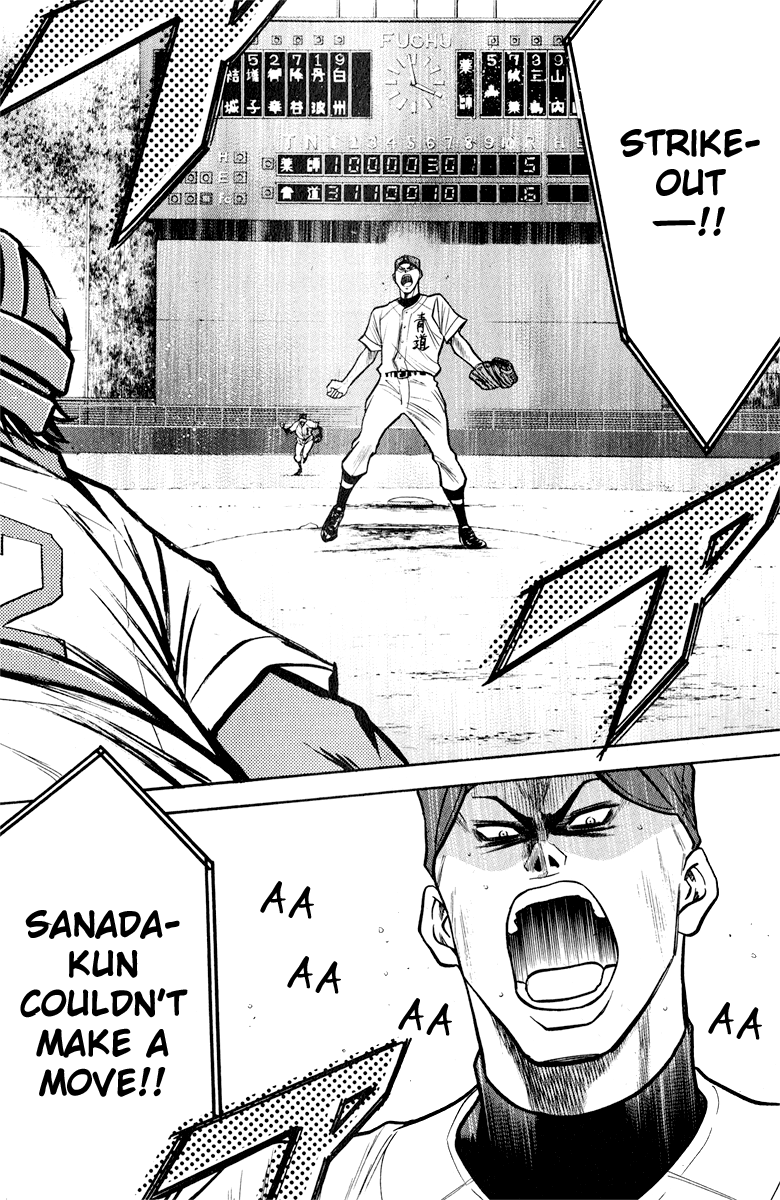
I’ve talked about Ace of the Diamond before. It’s my second-favorite baseball manga of all time*, and it is so because it a) is not about a team of scrappy underdogs, which allows for b) one of the most interesting dynamics in any sports manga – 4 highly skilled pitchers with alpha dog personalities competing for one starting spot on an elite baseball team. When that dynamic gets folded into competitive baseball matches, the result is a fantastic two-level narrative. This week, we were reminded who was alpha dog prime, and why. Before I go any further into how amazingly unique Tanba is as a character, here’s his “I logged a K against the other team’s ace with the tying run on third and two outs” face.**

DnA-115-1

Which might as well be the rest of my column, but I like to write

Continue reading

Manga Olympics for Bloggers Voting (Part 1, Round 1)

The Manga Olympics for Bloggers has officially begun! You can read all the articles, including some very interesting ones by our competition, and place your votes here: http://mangaweekend.wordpress.com/2013/06/17/manga-olympics-for-bloggers-poll-round-1part-1/

Our articles are on the voting page, or you can check them all out below:

Shojo/Josei: The Best at [More Than] Romance

Shonen/Seinen: Shonen Manga and Redefining Manliness

Shonen/Seinen: Shonen Manga Up and Comers Part 1

Manga Olympics for Bloggers (Shojo/Josei Round 1): The Best at [More Than] Romance

This post represents the second of three entries our blog is submitting to the Manga Olympics for Bloggers. Voting begins on June 16th, so just enjoy the article for now. Or check out our illustrious competition.

Maybe it’s because I have fewer female anime/manga fan friends than male ones, but there’s no demographic of manga I see misconstrued more often than shojo. The idea that it’s synonymous with sparkly, tween-appeal school-life romance seems to show up at least once a week in conversations I have. Fortunately, there’s one very easy way to dispel this misconception; look at some of the shojo manga that actually exist.

Continue reading

Manga Chapter of the Week: Wandering Son Chapter 121 (Love)

Takako Shimura’s Wandering Son is a fantastically tasteful and insightful work whose main character is a boy who wants to become a girl (Shuuichi Nitori). Wandering Son and Takako Shimura’s other works (most notably Aoi Hana) stand out in a landscape of anime and manga featuring LGBT characters for making said characters something more than a running gags or sexual fantasies. And also for being great manga that explore personal growth on a long-term basis.* For example, Wandering Son started out with the main characters in fourth grade, followed the characters through middle school and high school, and, as of this chapter, moved on to the beginning of the Nitori’s career. Typical of Takako Shimura, this stitch was accomplished with both the finesse of a tailor and the speed of a sewing machine.

Continue reading