I’ve mentioned before how I often I see misconceptions about shojo manga in my group of anime-fan friends. The most common misconception that pops up is that shojo is a one-note genre (rather than a demographic, which it is by definition), but a close second is the assumption that female fans are a small minority among those that follow anime. While that’s somewhat true in Japan, it couldn’t be further from the truth in America. Indeed, female fans may make up the majority of manga buyers in the United States. So why so few shojo anime? I’ve got a take on that.
Category Archives: Articles
Fun With Numbers: A Numbers-Based Way of Picking Out the Best Anime of the Past 8 Years
You know the old saying; “Stats don’t lie, except when they do.” Using stats to argue point son anime is kind of tough, as any individual figure, be it Japanese sales, TV Ratings, merchandising fees paid, or online ranking site figures, only reveals a small part of the overall picture. Since I compiled a rather large database containing multiple stat lines for 95% of the anime to air over the past 8 years, I might as well use it to numerically classify true-blue-chippers.
Allow me to introduce a very exclusive society, the Hit-L-Double-Double (HLDD) Club. It’s the list of anime that have accomplished 4 feats, 3 of which are very difficult individually. Specifically, it’s the list of anime that have sold 10,000+ units per volume in Japan (megahit sales territory), been licensed overseas (international sales viability), and have myanimelist rankings and popularities in the top 100/double digits (esteem and popularity overseas).
This is a list of the unequivocal successes, the things that have amassed not only megahit status in Japan, but also a significant English-speaking fanbase and critical praise. These are numerically irrefutable successes, at least in theory. You could call it the “talk to anyone” list, because you could talk to anyone in the industry and they would agree with you that it was a rock-solid commodity. From 2005-2012, anyway (that’s the era I have all the data for). All the members from that period are listed below, along with their statlines. Sequels are excluded to keep it tidy, and because they’re rarely much different from s1 stats-wise.
This list is not meant to be very surprising. It’s just a slightly different way of thinking about blue-chip anime.
Manga Olympics for Bloggers (Shonen/Seinen Round 1c): Mid-Major Manga and the Merits of a Struggling Artist Set [Slightly] Free
I’ve been writing about shonen for the past 2 weeks of this competition, and Keima only knows if I’ll make it out of the first round, so I might as well use the freedom I’ve got to coin a term that’s been percolating in my head for a while and talk about seinen (and some shonen, as well) while people are listening. I’ve taken to calling some manga Mid-Major because they’re great in a way that screams “improbable” and “unsustainable”, but because of that are even more fun to watch than consistently great ones. Clearly not top-tier, but clearly blessed with enough potential to make a little legend, like Dunk City FGCU demolishing Georgetown in this year’s NCAA Tourney.* There’s an appeal to watching the little engine that could suddenly transform into a giant robot and dropkick a galaxy, and nowhere (other than sports) does this phenomenon happen more often than in the world of monthly manga.
Manga Olympics for Bloggers (Shonen/Seinen Round 1b): Shonen Manga Up and Comers – Part 2 (Sakamoto Desu Ga?)
Manga in Japan can be hard to break into, and most manga take time to become big sellers. That is why it is always amazing when the first volumes of certain series do so well so quickly. In the past year, there have been many big starts, with one of them being:
Sakamoto Desu Ga? – 677,000 copies sold of the first volume since release this January
All the girls want him. All the guys want to be him. In fact, literally everybody at school does. He’s Sakamoto. Whether it’s cooking, writing, studying, or anything else, he is the best at it. From writing with two hands at the same time to being able to sit on a chair even when it has been pulled out from underneath him, he is seemingly able to do *anything. No wonder he’s one of the most talked about people in school! But what happens when people interact with Sakamoto? And what does Sakamoto do to them?
Manga Olympics for Bloggers (Shonen/Seinen Round 1b): Oneshots, Hand-Holding-Dance-Fighting, and Smacking Failure in the Solar Plexus – The Evolution of Komi Naoshi
I’m a tremendous fan of battle series that play with creative power systems. So I was ecstatic when, some 5 years ago now, a new fantasy adventure manga about a couple who needed to hold hands constantly or perish called Double Arts arrived on the scene. I was equally devastated when, half a year later, Weekly Shonen Jump’s ruthless management killed the series dead immediately after some of the best introductory chapters of manga I’d ever read. I was younger then and didn’t realize that there were thousands of amazing manga I’d never even be able to read in my lifetime, so I was all kinds of devastated.
This whole affair was my introduction to one Komi Naoshi, a multiclass genius of a manga author who handily survived Double Arts’ cancellation and is currently set to break the anime barrier with an adaptation of two-years-young Weekly Shonen Jump (hereafter WSJ) manga Nisekoi. He’s also one of the few personalities in manga or anime who gets exponentially cooler the more I read about him. If you don’t currently have the afternoon’s worth of time to check out his entire mangaography (something I wholly endorse), then you might as well read this column.
Manga Olympics for Bloggers (Shojo/Josei Round 1b): Beating Back the Bullies – Adversity in Manga With a Female Audience
Last week for the shonen/seinen bracket, I wrote about how shonen manga cleverly taught kids a variety of fairly useful life lessons. I originally wanted to start the shojo/josei series the same way, but the “shonen/seinen/shojo/josei is not a genre” frustration stuck me at the right time and before I knew it I had an article. But there’s plenty of juice left in this battery, and 2 weeks left in the first round of competition. Let’s get to it.
There’s one theme I’ve noticed which shows up a lot in shojo manga (and still quite often in josei manga). Call it peer adversity, bullying, social stress, or whatever, but it’s fairly common for the lead character in manga targeted towards women to be on the receiving end of nasty treatment by her peers. They way different characters respond is a study in variety, and while my experience with shojo manga is by no means exhaustive, what I see shows me a medium with a mission of teaching women young and old how to cope and fight back.
Manga Olympics for Bloggers (Shonen/Seinen Round 1): Shonen Manga Up and Comers – Part 1
This post represents the third of three entries our blog is submitting this week to the Manga Olympics for Bloggers. Voting begins on June 16th, so just enjoy the article for now. Or check out our illustrious competition.
–
Manga in Japan can be hard to break into, and most manga take time to become big sellers. That is why it is always amazing when the first volumes of series do so well so quickly. In the past year, there have been many big starts with the biggest being:
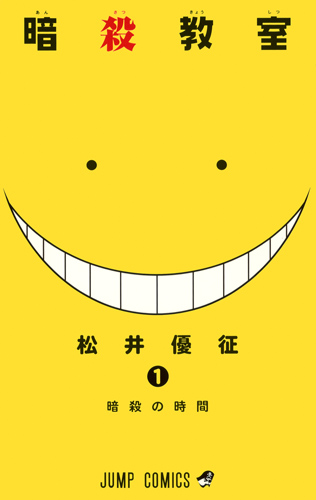
Assassination Classroom – Over one million copies of the first volume in print in less than one year
Assassination Classroom by Yusei Matsui, the creator of Majin Tantei Nōgami Neuro, is the story of what happens when aliens invade – or, in this case, THE alien. Koro is an alien that can move at speeds of mach 20, is incredibly powerful, and destroys most of the moon during first contact. He says that he will destroy the earth in one year, but during that year he wants to teach a middle school class, so the kids of Kunugigaoka Middle School’s class 3-E become his pupils, and Koro-sensei teaches them the 4 Rs- Reading, Writing, ‘Rithmetic, and ‘Radication, for he is also teaching them how to kill him. But how easy is it to kill a genocidal alien when he is also the best teacher you have ever had? Continue reading
Manga Olympics for Bloggers (Shojo/Josei Round 1): The Best at [More Than] Romance
This post represents the second of three entries our blog is submitting to the Manga Olympics for Bloggers. Voting begins on June 16th, so just enjoy the article for now. Or check out our illustrious competition.
–
Maybe it’s because I have fewer female anime/manga fan friends than male ones, but there’s no demographic of manga I see misconstrued more often than shojo. The idea that it’s synonymous with sparkly, tween-appeal school-life romance seems to show up at least once a week in conversations I have. Fortunately, there’s one very easy way to dispel this misconception; look at some of the shojo manga that actually exist.
Manga Olympics for Bloggers (Shonen/Seinen Round 1): Shonen Manga and Redefining Manliness
This post represents the first of three entries our blog is submitting to the Manga Olympics for Bloggers. Voting begins in a few days on June 16th, so just enjoy the article for now. Or check out our illustrious competition.
–
Shonen manga, as literally defined, are manga marketed towards young boys. There are several implications of this definition, but I’m going to zero in on one in particular for the moment. Because shonen manga is popular with and being marketed towards younger boys, it must to some degree adhere to their notions of manliness, but still holds a unique opportunity to redefine what they see as cool, manly traits to aspire to. Let’s dive right in and take a look at some of the many shonen manga that subtly teach kids life lessons.
Fun With Numbers: Inu x Boku SS and Anime As a 20-Minute Manga Commercial
Following up on the impressive (well, to me) discovery that Inu x Boku SS is Square Enix’s top manga, I had another thought. It went something like this; “Well, that anime was pretty darn good, and I know it sold a fair amount of Blu-Rays. I wonder if that has anything to do with how successful the manga is right now?” And so I took to the Oricon rankings, checking for shows from Winter and Spring 2012 that came from manga source material, and looking to see if they experienced a boost in sales. So I put a lot of numbers into a lot of spreadsheets, got distracted by the Saurday anime slate, and made a lot of graphs. If you’ve ever wondered why manga publishers sponsor anime, this should be an entertaining read.
So. Much. Paper.